
Le site web de la Société française d’histoire des outre-mers (S
Articles les plus récents
-
Hors-Série Concours de la S
fhom - Capes et Agrégation d’histoire, 2022-2025Commander (10 €) le hors-série Histoire coloniale et impériale de l’Afrique :
https://www.payasso.fr/librairie-sfhom/commandes
-
Vient de paraître Madeleine’s Children. Family, Freedom, Secrets, and Lies in France’s Indian Ocean Colonies de Sue
Peabody aux Oxford UPLe 15 mars 2018 à 13h55
Vient de paraître Madeleine’s Children. Family, Freedom, Secrets, and Lies in France’s Indian Ocean Colonies de Sue
Peabody aux Oxford University Press, 2017, 344 p. ISBN : 9780190233884 Prix : 35 $ (existe aussi en version électronique).
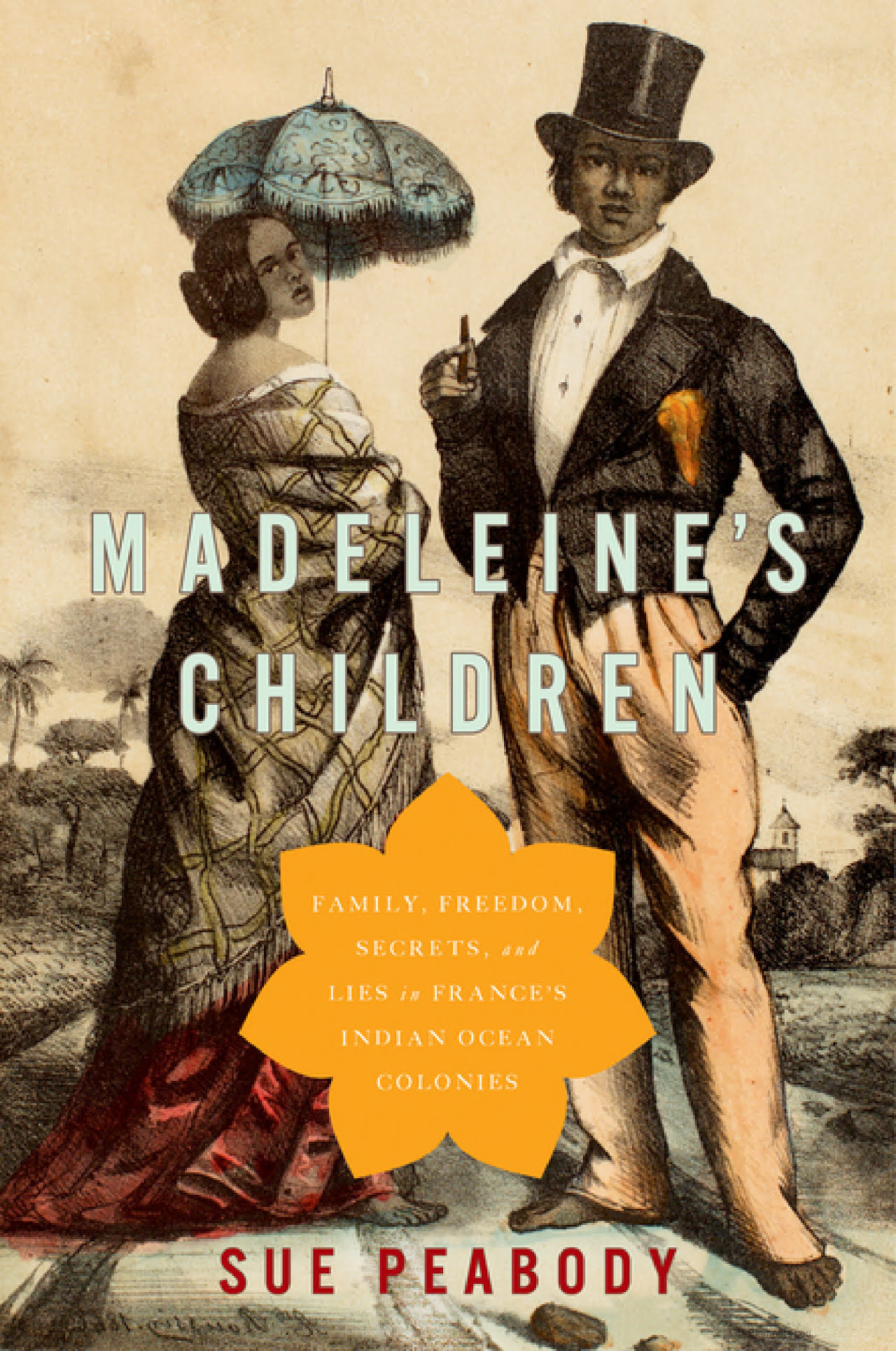
Sue Peabody vient de recevoir le David H. Pinkney Prize 2018 (Society for French Historical Studies) pour cet ouvrage (information via la French Colonial Historical Society.
"Madeleine’s Children uncovers a multigenerational saga of an enslaved family in India and two islands, Réunion and Mauritius, in the eastern empires of France and Britain during the eighteenth and nineteenth centuries. A tale of legal intrigue, it reveals the lives and secret relationships between slaves and free people that have remained obscure for two centuries.
As a child, Madeleine was pawned by her impoverished family and became the slave of a French woman in Bengal. She accompanied her mistress to France as a teenager, but she did not challenge her enslavement there on the basis of France’s Free Soil principle, a consideration that did not come to light until future lawyers investigated her story. In France, a new master and mistress purchased her, despite laws prohibiting the sale of slaves within the kingdom. The couple transported Madeleine across the ocean to their plantation in the Indian Ocean colonies, where she eventually gave birth to three children : Maurice, Constance, and Furcy. One died a slave and two eventually became free, but under very different circumstances. On 21 November 1817, Furcy exited the gates of his master’s mansion and declared himself a free man. The lawsuit waged by Furcy to challenge his wrongful enslavement ultimately brought him before the Royal Court of Paris, despite the extreme measures that his putative master, Joseph Lory, deployed to retain him as his slave.
A meticulous work of archival detection, Madeleine’s Children investigates the cunning, clandestine, and brutal strategies that masters devised to keep slaves under their control-and paints a vivid picture of the unique and evolving meanings of slavery and freedom in the Indian Ocean world."
SuePeabody is Meyer Distinguished Professor of Liberal Arts and History at Washington State University Vancouver. She is the author of "There Are No Slaves in France" : The Political Culture of Race and Slavery in the Ancien Regime (OUP, 1996) and the co-editor of The Color of Liberty : Histories of Race in France and Slavery, Freedom and the Law in the Atlantic World. -
Colloque "La montée de l’Asie en histoire et perspective globales" (Paris & Le Havre, 14-16 mars 2018)
Le 11 mars 2018 à 15h04
Colloque ’La montée de l’Asie
En histoire et perspective globales’
Paris & Le Havre, 14-16 mars 2018
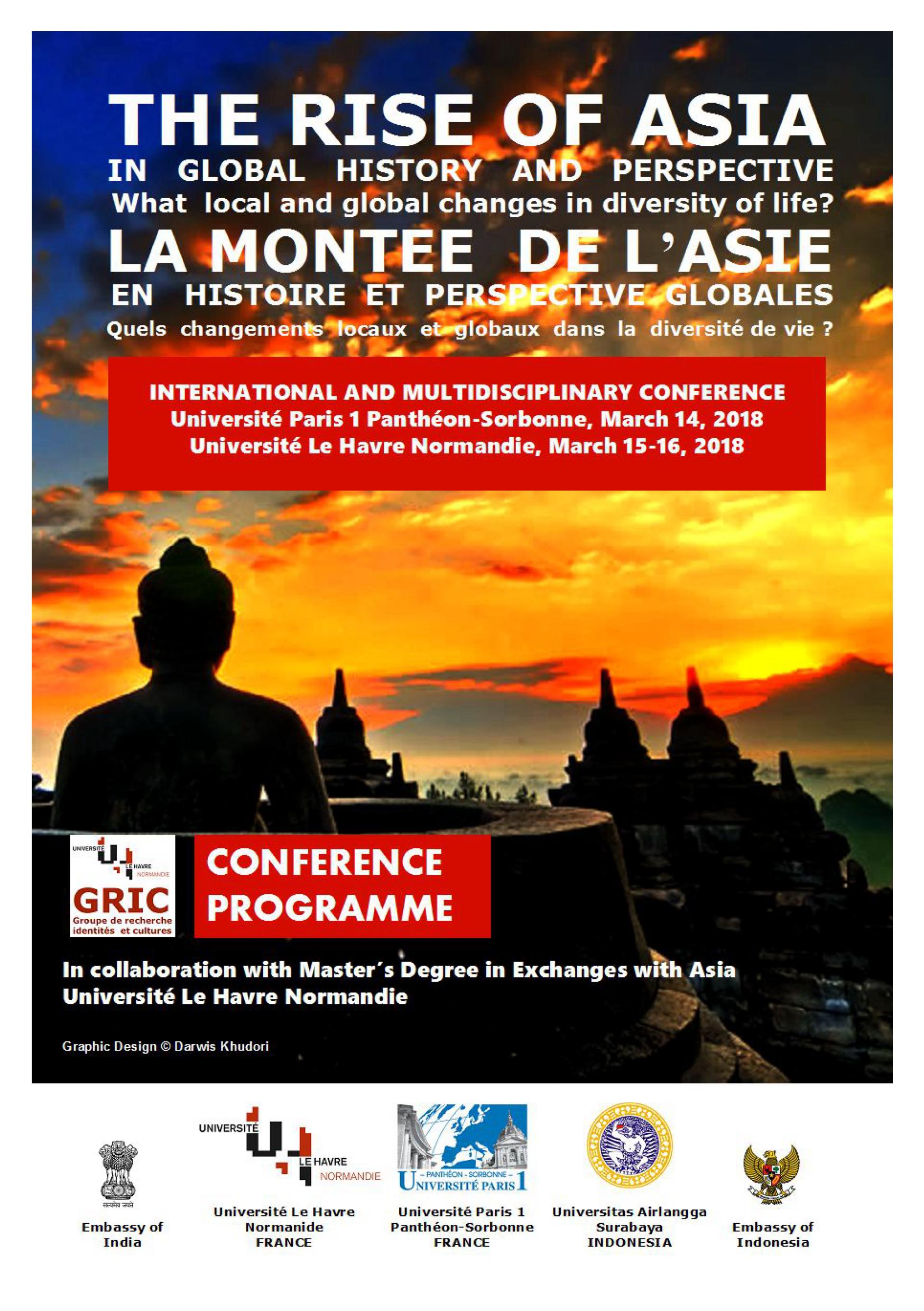
COLLOQUE INTERNATIONAL ET MULTIDISCIPLINAIRE
Paris, Université Paris 1 Panthéon-Sorbonne, le 14 mars 2018
Le Havre, Université Le Havre Normandie, du 15 au 16 mars 2018
Site web : http://www.bandungspirit.org/
INSTITUTIONS D’ACCUEIL
CHAC (Centre d’Histoire de l’Asie Contemporaine), Université Paris 1 Panthéon-Sorbonne, Paris, France
GRIC (Groupe de recherche identités et cultures), Université Le Havre Normandie, Le Havre, France
INSTITUTIONS CO-ORGANISATRICES
Institut Tsinghua pour des Etudes avancées en Sciences humaines et sociales, Université Tsinghua, Pékin, Chine
Faculté des Sciences humaines, Universitas Airlangga, Surabaya, Indonésie
Institut des Sciences sociales, New Delhi, Inde
Centre des Études africaines, Université de Tokyo des Études étrangères, Japon
Département des Sciences politiques, Université Jamia Millia Islamia, New Delhi, Inde
Centre des Études culturelles contemporaines, Université de Shanghai, Chine
programme-montee-asie-2018.pdf
Source de l’information :
http://www.bandungspirit.org/
Pour mémoire, l’appel à communication :
http://www.sfhom.com/spip.php?article2369
-
Vient de paraître Les premières compagnies dans l’Atlantique 1600-1650, I. Structures et modes de fonctionnement sous la direction d’Éric
Roulet chez Shaker VerlagLe 11 mars 2018 à 14h39
Vient de paraître Les premières compagnies dans l’Atlantique 1600-1650, I. Structures et modes de fonctionnement sous la direction d’Éric
Roulet chez Shaker Verlag, "Le monde des compagnies", 2017, 240 p. ISBN : 978-3-8440-4095-1 Prix : 24,80 € (existe aussi en version électronique).
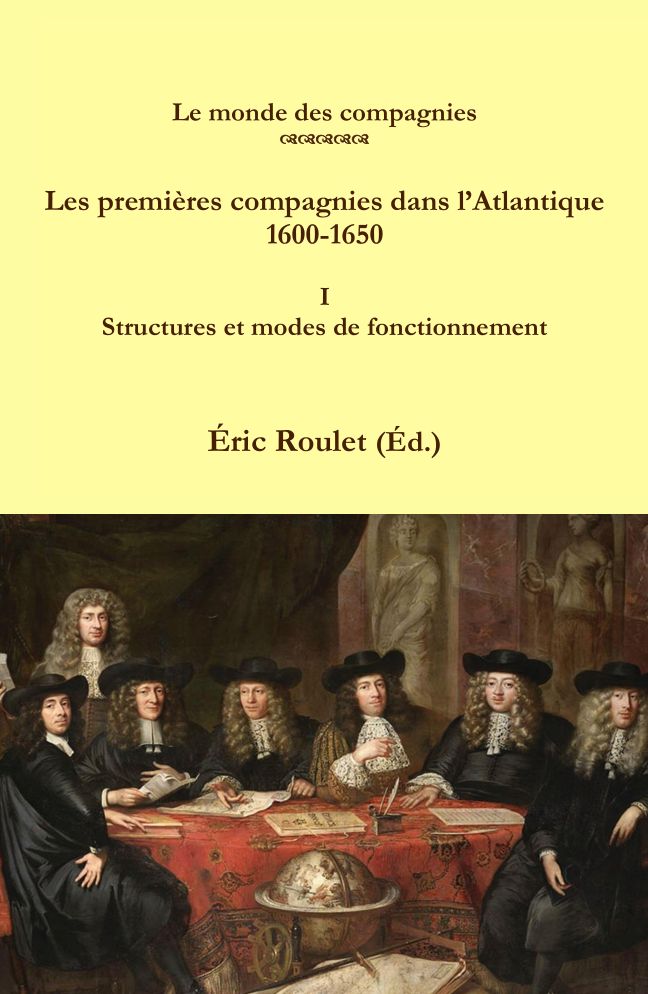
"Les compagnies de commerce et de colonisation du XVIIe siècle ne bénéficient pas dans l’historiographie d’une bonne image. Elles sont jugées peu efficaces voire inutiles et inadaptées. Les travaux de la fin du XIXe siècle et du XXe siècle les ont depuis longtemps condamnées. Il est nécessaire d’aborder autrement la question de leur place dans la première globalisation en les replaçant au cœur du dispositif d’expansion européen, et en privilégiant une démarche résolument comparatiste en prenant en compte les entreprises françaises, anglaises et néerlandaises.
Pour ne regarder que celles qui s’intéressent à l’espace atlantique, le plus fortement concurrentiel, force est de remarquer qu’elles ont joué un rôle essentiel dans la colonisation de l’Amérique au XVIIe siècle, avec l’approbation de leurs gouvernements respectifs, et dans le développement du trafic transocéanique. Elles sont à l’origine de la traite négrière. Mais quoique soutenus par les États, dont elles ont obtenu des privilèges, elles n’en ont pas moins une existence propre, ce sont des entreprises privées supportées par des actionnaires qui en attendent des bénéfices.
Le présent ouvrage est le premier volet d’une enquête sur les aspects entrepreneuriaux des compagnies. Il est consacré à l’organisation structurelle de ces compagnies afin de saisir les structures-type, les originalités régionales, et les influences d’un espace à l’autre"
roulet-monde-compagnies-tdm.pdf
-
Vient de paraître Entangled Empires. The Anglo-Iberian Atlantic, 1500-1830 sous la direction de Jorge
Cañizares-Esguerra aux University of Pennsylvania PressLe 9 mars 2018 à 15h17
Vient de paraître Entangled Empires. The Anglo-Iberian Atlantic, 1500-1830 sous la direction de Jorge
Cañizares-Esguerra aux University of Pennsylvania Press, 2018, 368 p. ISBN : 9780812249835 Prix : 45 £ (existe aussi en version électronique).
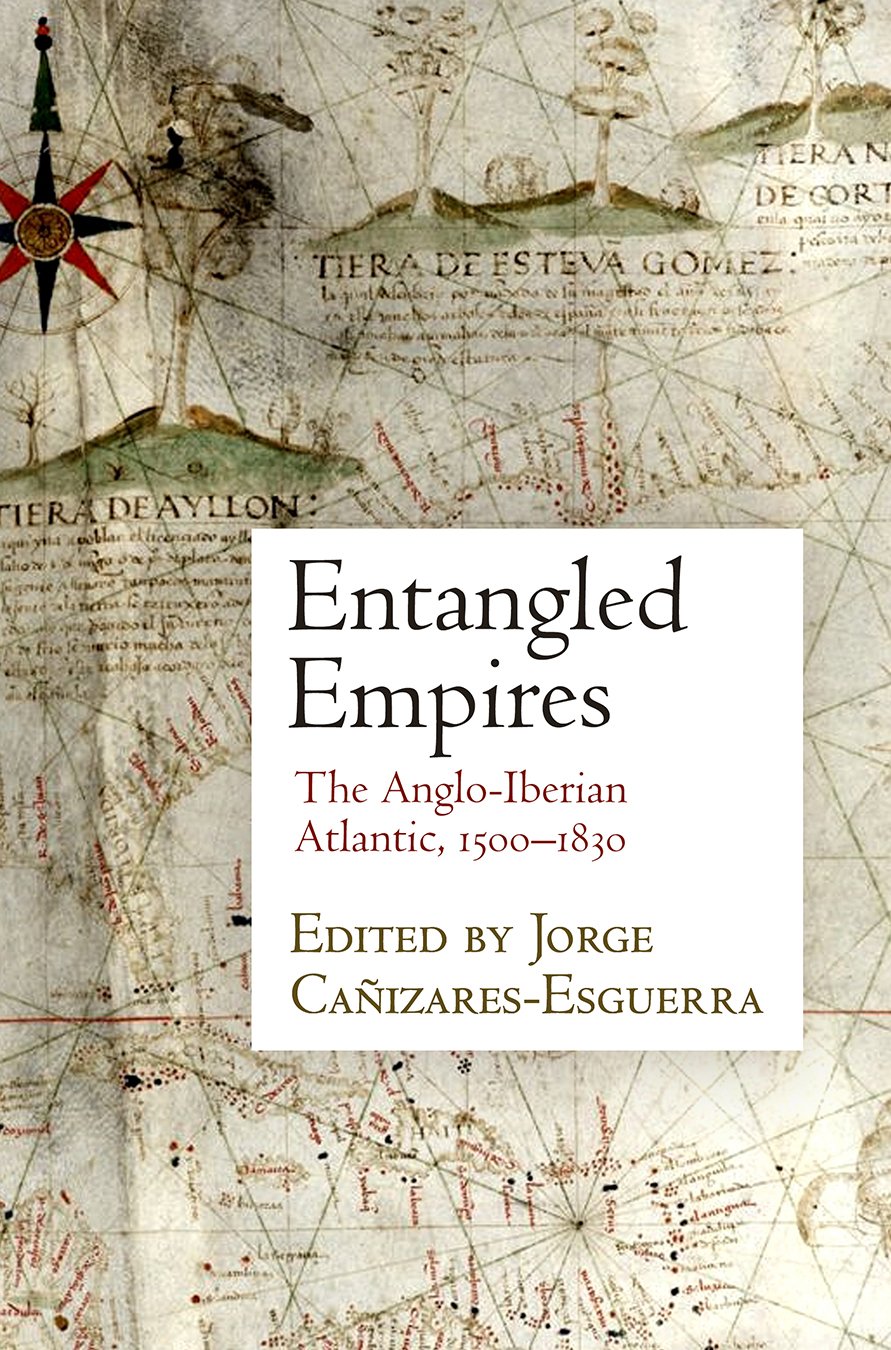
"According to conventional wisdom, in the sixteenth century, Spain and Portugal served as a model to the English for how to go about establishing colonies in the New World and Africa. By the eighteenth century, however, it was Spain and Portugal that aspired to imitate the British. Editor Jorge Cañizares-Esguerra and the contributors to Entangled Empires challenge these long-standing assumptions, exploring how Spain, Britain, and Portugal shaped one another throughout the entire period, from the sixteenth to the nineteenth centuries. They argue that these empires were interconnected from the very outset in their production and sharing of knowledge as well as in their economic activities. Willingly or unwillingly, African slaves, Amerindians, converso traders, smugglers, missionaries, diplomats, settlers, soldiers, and pirates crossed geographical, linguistic, and political boundaries and cocreated not only local but also imperial histories. Contributors reveal that entanglement was not merely a process that influenced events in the colonies after their founding ; it was constitutive of European empire from the beginning.
The essays in Entangled Empires seek to clarify the processes that rendered the intertwined histories of these colonial worlds invisible, including practices of archival erasure as well as selective memorialization. Bringing together a large geography and chronology, Entangled Empires emphasizes the importance of understanding connections, both intellectual and practical, between the English and Iberian imperial projects. The colonial history of the United States ought to be considered part of the history of colonial Latino-America just as Latin-American history should be understood as fundamental to the formation of the United States."
entangled-empires-toc.pdf
JorgeCañizares-Esguerra is the Alice Drysdale Sheffield Professor of History at the University of Texas at Austin. He is coeditor of The Black Urban Atlantic in the Age of the Slave Trade, also available from the University of Pennsylvania Press.
Contributors : Ernesto Bassi, Benjamin Breen, Jorge Cañizares-Esguerra, Bradley Dixon, Kristie Flannery, Eliga Gould, Michael Guasco, April Hatfield, Christopher Heaney, Christopher Schmidt-Nowara, Mark Sheaves, Holly Snyder, Cameron Strang. -
Vient de paraître African Voices on Slavery and the Slave Trade en deux volumes sous la direction de Alice
Bellagamba , Sandra E.Green et Martin A.Klein aux Cambridge UPLe 9 mars 2018 à 10h20
Vient de paraître African Voices on Slavery and the Slave Trade en deux volumes sous la direction de Alice
Bellagamba , Sandra E.Green et Martin A.Klein aux Cambridge University Press, vol. 1 The Sources (2013, édition paperback en 2017), vol. 2 Essays on Sources and Methods (2016, édition hardback), 585 p. & 215 p. ISBN : 9780521145268 (paperback) et 9780521199612 Prix : 24,99 £ (paperback) et 64,99 £ (existe aussi en version électronique).
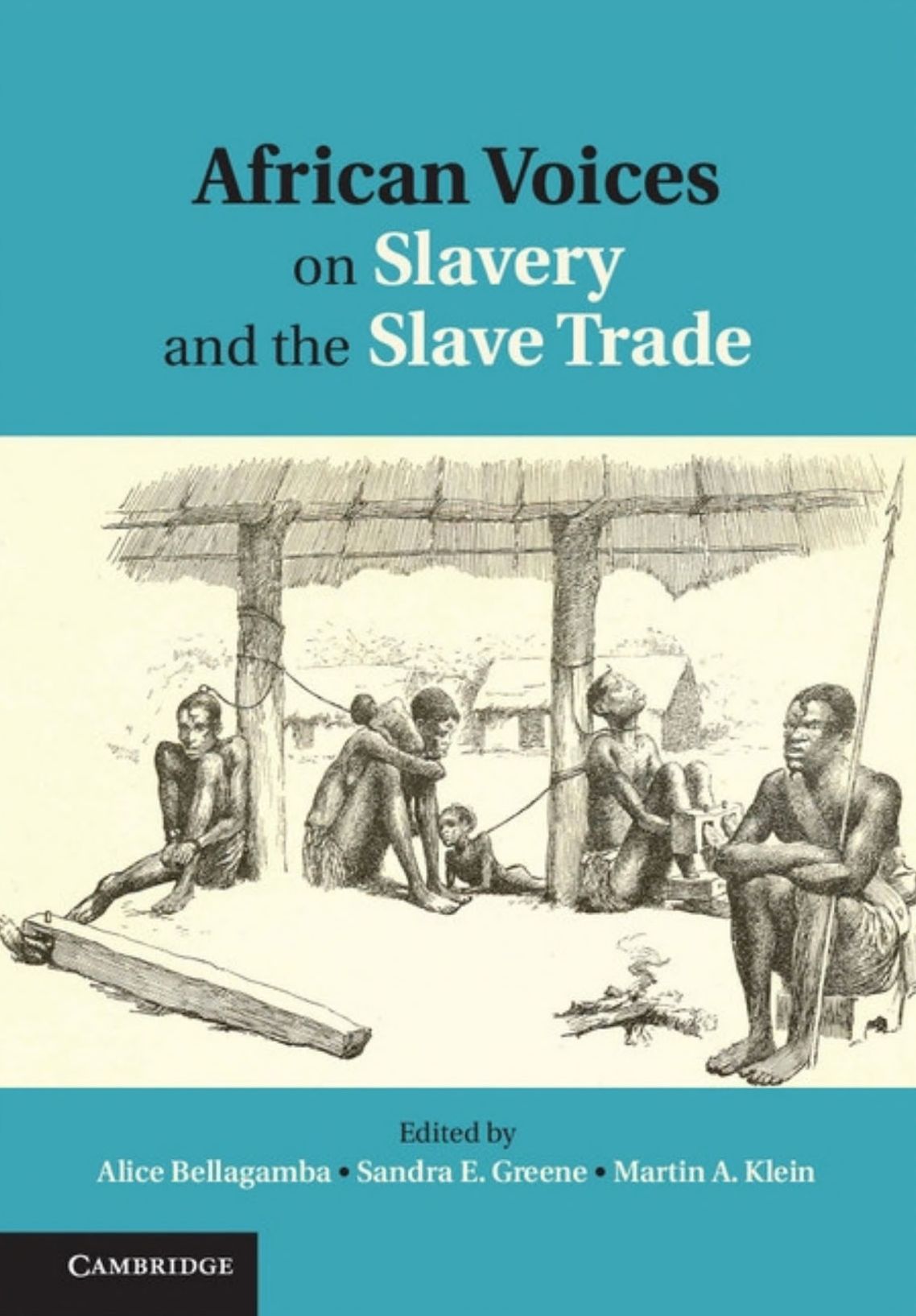
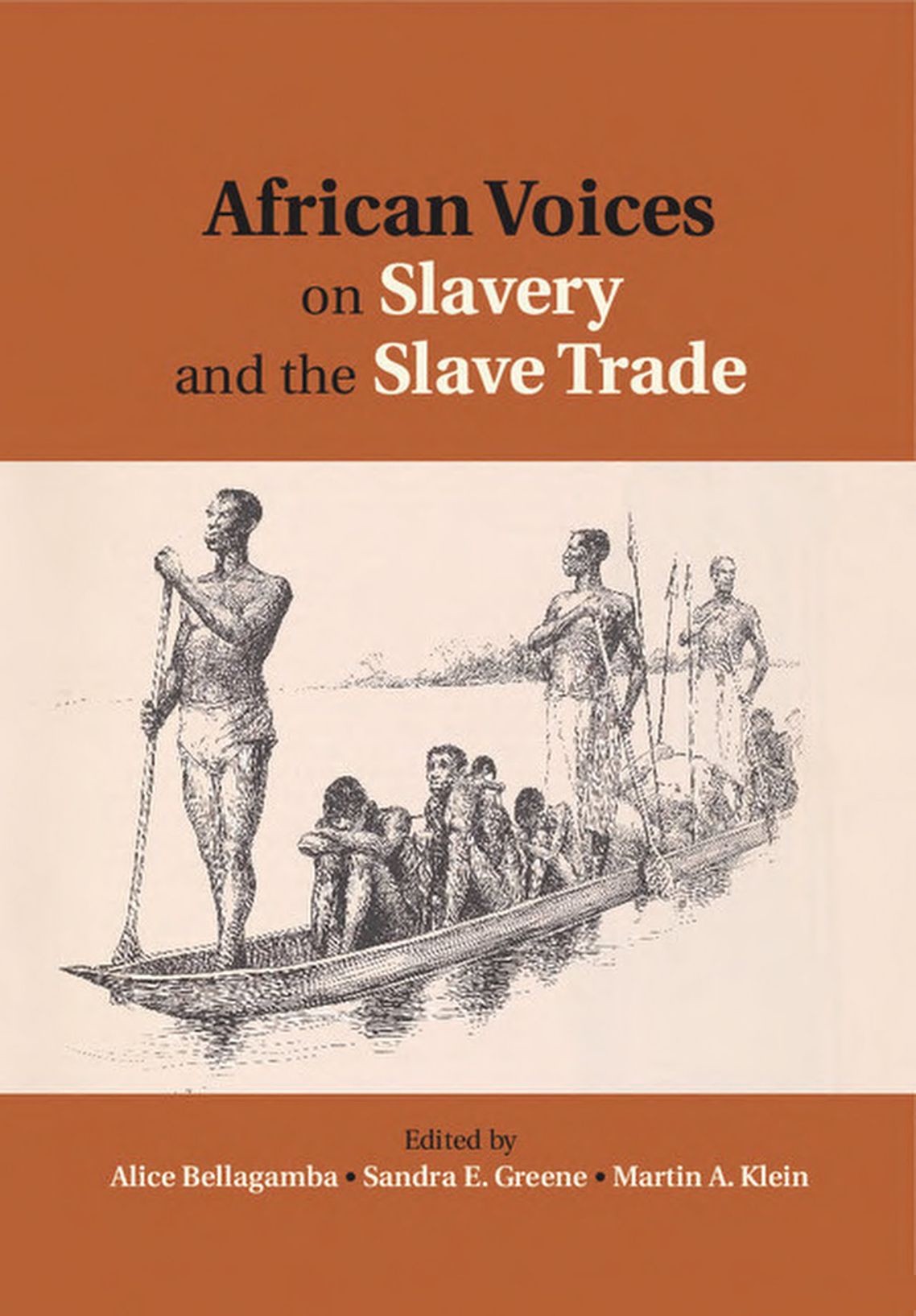
"Though the history of slavery is a central topic for African, Atlantic world and world history, most of the sources presenting research in this area are European in origin. To cast light on African perspectives, and on the point of view of enslaved men and women, this group of top Africanist scholars has examined both conventional historical sources (such as European travel accounts, colonial documents, court cases, and missionary records) and less-explored sources of information (such as folklore, oral traditions, songs and proverbs, life histories collected by missionaries and colonial officials, correspondence in Arabic, and consular and admiralty interviews with runaway slaves). Each source has a short introduction highlighting its significance and orienting the reader. This first of two volumes provides students and scholars with a trove of African sources for studying African slavery and the slave trade."
"What were the experiences of those in Africa who suffered from the practice of slavery, those who found themselves captured and sold from person to person, those who died on the trails, those who were forced to live in fear ? And what of those Africans who profited from the slave trade and slavery ? What were their perspectives ? How do we access any of these experiences and views ? This volume explores diverse sources such as oral testimonies, possession rituals, Arabic language sources, European missionary, administrative and court records and African intellectual writings to discover what they can tell us about slavery and the slave trade in Africa. Also discussed are the methodologies that can be used to uncover the often hidden experiences of Africans embedded in these sources. This book will be invaluable for students and researchers interested in the history of slavery, the slave trade and post-slavery in Africa."
african-voices-1-toc.pdf
african-voices-2-toc.pdf
AliceBellagamba is an Associate Professor of Cultural Anthropology and African Studies at the University of Milan, Bicocca. She is the author of Ethnographie, histoire et colonialisme en Gambie (2002), L’Africa e la stregoneria : Saggio di antropologia storica (2008) and co-editor of Beside the State : Emergent Powers in Contemporary Africa (with Georg Klute, 2008). She has extensive fieldwork experience in the Senegambia and since 2000 she has directed MEBAO, a network of Italian and African scholars working on historical memory and heritage in West Africa. In 2004–5, she was Alexander Humboldt Fellow at the University of Bayreuth and in 2011–12 a EURIAS Senior Fellow at the Institute of Advanced Studies of Berlin.
Sandra E.Greene is a Professor of African History at Cornell University, New York. She has served as President and Vice-President of the African Studies Association. Greene has written three books : West African Narratives of Slavery : Texts from Late Nineteenth- and Early Twentieth-Century Ghana (2011) ; Sacred Sites and the Colonial Encounter : A History of Meaning and Memory in Ghana (2002), which was a finalist for the 2003 Herskovits Award ; and Gender, Ethnicity and Social Change on the Upper Slave Coast : A History of the Anlo-Ewe (1996), which earned an Honorable Mention from the 1997 Herskovits Award Committee.
Martin A.Klein is currently Professor Emeritus in the Department of History at the University of Toronto. Klein has taught African history for 34 years. He has served as President of both the African Studies Association (ASA) and the Canadian Association of African Studies. He has written or edited several books, including Historical Dictionary of Slavery and Abolition (2002) ; Slavery and Colonial Rule in Africa (Cambridge, 1998), edited with Suzanne Miers ; Breaking the Chains : Slavery, Bondage, and Emancipation in Modern Africa and Asia (1993) ; and Women and Slavery in Africa (1983), edited with Claire C. Robertson. His book Slavery and Colonial Rule in French West Africa earned an Honorable Mention from the Herskovits Award Committee. In 2001, Klein was awarded the ASA’s Distinguished Africanist Award. He also edits Cambridge University Press’s New Perspectives in African History series.
Contributors :
Kofi Anyidoho, Alice Bellagamba, Sandra E. Greene, Martin A. Klein, Alessandra Brivio, E. S. D. Fomin, Mohammed Bashir Salau, Francesca Declich, Jeanne Maddox Toungara, Olatunju Ojo, Damian Opata, Dana Rush, Alessandra Brivio, Ahmaddou Sehou, Ute Röschenthaler, Bayo Holsey, Benjamin Claude Brower, George Michael La Rue, Ismael Musa Montana, Pierluigi Valsecchi, Benjamin Acloque, Hideaki Suzuki, Marie Rodet, Bruce Mouser, Trevor Getz, Kristie Mann, Silkie Strickrodt, Richard Roberts, Hilary Jones, Klara Boyer-Rossol, Bruce S. Hall, Yacine Daddi Addoun, Ghislaine Lydon, Elisabeth McMahon, Paolo Gaibazzi, Benedetta Rossi (volume 1) ;
Alice Bellagamba, Sandra E. Greene, Martin A. Klein, Ghislaine Lydon, Bruce Hall, Pierluigi Valsecchi, Oluwatoyin Oduntan, Kristin Mann, Richard Roberts, Alessandra Brivio (volume 2). -
Album photographique "1898, du Congo au Lac Tchad" de Toussaint Mercuri (expédition Ferdinand de Béhagle)
Le 7 mars 2018 à 14h55
Album photographique de Toussaint Mercuri
"1898, du Congo au Lac Tchad"
Expédition Ferdinand de Béhagle
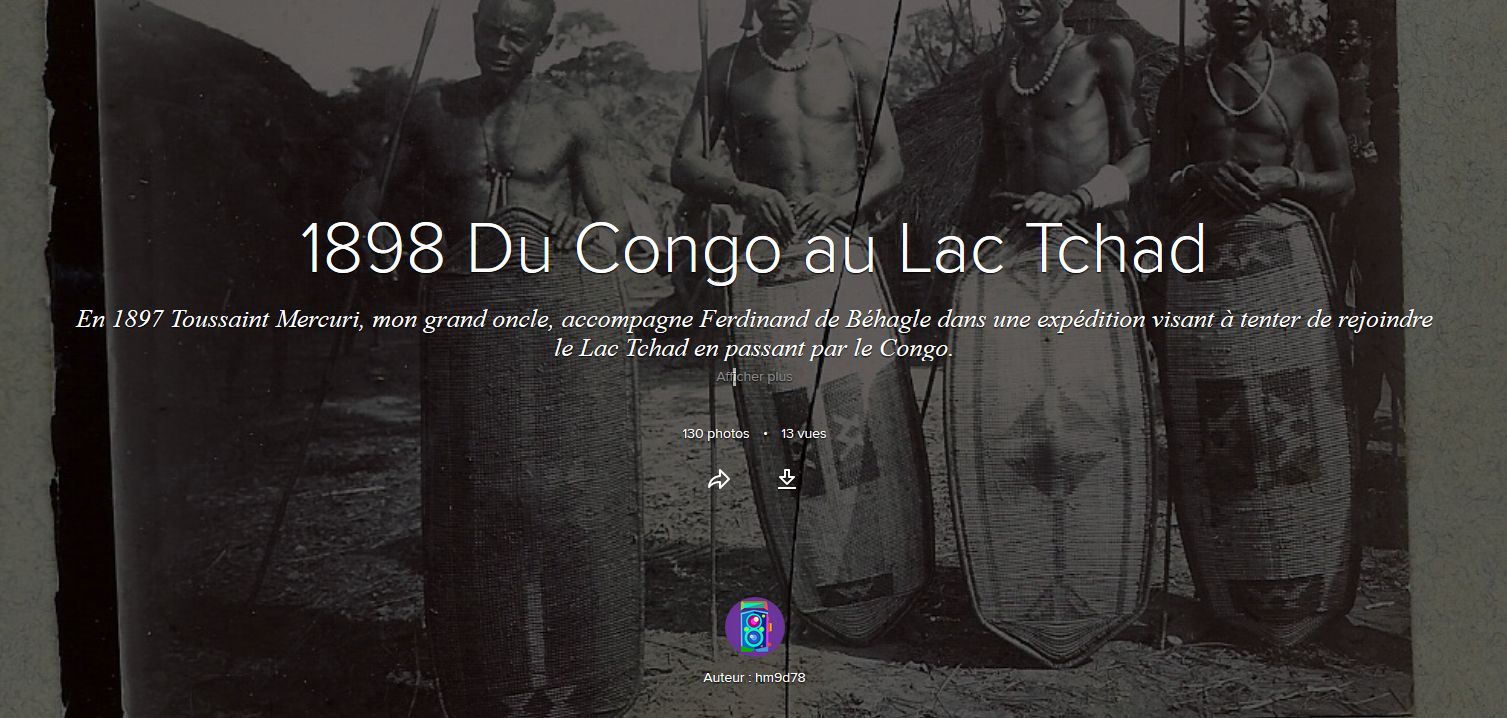
"En 1897 Toussaint Mercuri, mon grand oncle, accompagne Ferdinand de Béhagle dans une expédition visant à tenter de rejoindre le Lac Tchad en passant par le Congo.
Au programme, il est également prévu de rencontrer les deux principaux sultans esclavagistes et réputés "sanguinaires" qui dominent ces territoires : Rabah et Senoussi, lequel, le 9 avril 1890 a massacré Crampel et les représentants de sa mission.
De Béhagle ira vers Rabah et se fera capturer, emprisonner puis fut exécuté par pendaison en juillet 1899
Toussaint Mercuri, emprisonné aussi par Senoussi, finira par gagner sa confiance, lui faire accepter pacifiquement sa "soumission" à la France, et deviendra le premier Résident de France à ses côtés. Il passera près de deux ans dans son entourage et se liera d’amitié avec son fils.
De retour en France, il rendra compte de sa mission à ses commanditaires, avant de rejoindre Constantine puis Lucet en Algérie, village de sa famille.
En 1901, il décide de repartir auprès de Senoussi, mais à son arrivée à N’Délé il tombe malade e décède sur place. On dit que Senoussi, très affecté par sa disparition fit sacrifier des dizaines de bœufs en son honneur.
Les photos qui sont présentées couvrent cette période et ont été prises par Toussaint Mercuri lui même qui en fera un album qui m’a été confié récemment. Elles portent plus ou moins bien leur âge. Je les aient scannées avec leurs légendes écrites de la main de mon grand oncle.
Elles sont dans l’ordre de l’album, j’en ai retouché quelques unes pour essayer de les rendre plus visibles sans être spécialiste.
J’ai pensé que les rendre publiques pourrait intéresser certains historiens, et c’est une façon pour moi également de lui rendre hommage."Hervé Mercuri
Nous tenons à remercier chaleureusement Monsieur Hervé Mercuri pour cette mise en ligne de 130 photographies de son grand-oncle Toussaint Mercuri — source d’un intérêt incroyable — et pour nous avoir autorisé à l’annoncer à nos lecteurs !
Le visionnage et le téléchargement des clichés sont libres, seules l’utilisation publique et la reproduction sont soumises à autorisation de M. Mercuri.
Source de l’information :
https://www.flickr.com/gp/148507146@N07/2UEaeA
Un grand merci à l’ami Francis Simonis pour nous avoir communiqué cette information tant précieuse. -
Vient de paraître L’institution de l’esclavage. Une approche mondiale d’Alain
Testart chez GallimardLe 6 mars 2018 à 12h05
Vient de paraître L’institution de l’esclavage. Une approche mondiale d’Alain
Testart chez Gallimard, "Bibliothèque des Sciences humaines", 2018, 384 p. ISBN : 9782070196883 Prix : 27 €.
Nouvelle édition révisée et complétée par ValérieLécrivain de L’esclave, la dette et le pouvoir
"L’institution de l’esclavage est une reprise complétée et actualisée d’un ouvrage qu’Alain Testart, décédé en 2013, avait publié sous le titre L’esclave, la dette et le pouvoir, en 2001, aux Éditions Errance.
La définition de l’esclave a toujours été incertaine et le statut de ce que l’on met sous ce nom a beaucoup changé selon les temps et les lieux. Mais il reste toujours un exclu : exclu de la cité dans les sociétés antiques, exclu de la parenté dans les sociétés lignagères, exclu en tant que sujet dans les sociétés monarchiques. C’est l’exclusion d’une des relations sociales tenues pour fondamentales par la société qui distingue l’esclave des autres formes de dépendance et d’asservissement.
Sous l’esclavage, gît donc la question du pouvoir. Il y a, pour l’auteur, un lien direct entre l’esclavage et l’émergence de l’État, qui s’arroge le monopole des esclaves, vis-à-vis des pouvoirs concurrents, de tout ordre, économique ou non. D’où la constatation, bien documentée, que c’est dans les sociétés les moins centralisées et les moins hiérarchisées, en principe les moins oppressives, que se rencontre la pire condition de l’esclave. Et l’inverse : c’est dans les sociétés les plus autoritaires et despotiques que la condition de l’esclave semble la moins défavorable.
Alain Testart est un des rares anthropologues qui disposent d’une culture aussi étendue, largement comparative. Cette nouvelle édition, établie par sa collaboratrice, Valérie Lécrivain, ajoute à l’ancienne un article inédit qui permet de préciser les thèses de l’auteur. Elle fait de ce livre d’il y a plus de quinze ans un livre neuf, plus adapté aux connaissances et aux sensibilités contemporaines." -
Vient de paraître African Dominion. A New History of Empire in Early and Medieval West Africa de Michael A.
Gomez aux Princeton UPLe 6 mars 2018 à 11h38
Vient de paraître African Dominion. A New History of Empire in Early and Medieval West Africa de Michael A.
Gomez aux Princeton University Press, 2018, 520 p. ISBN : 9780691177427 Prix : 37,95 £ (existe aussi en version électronique).
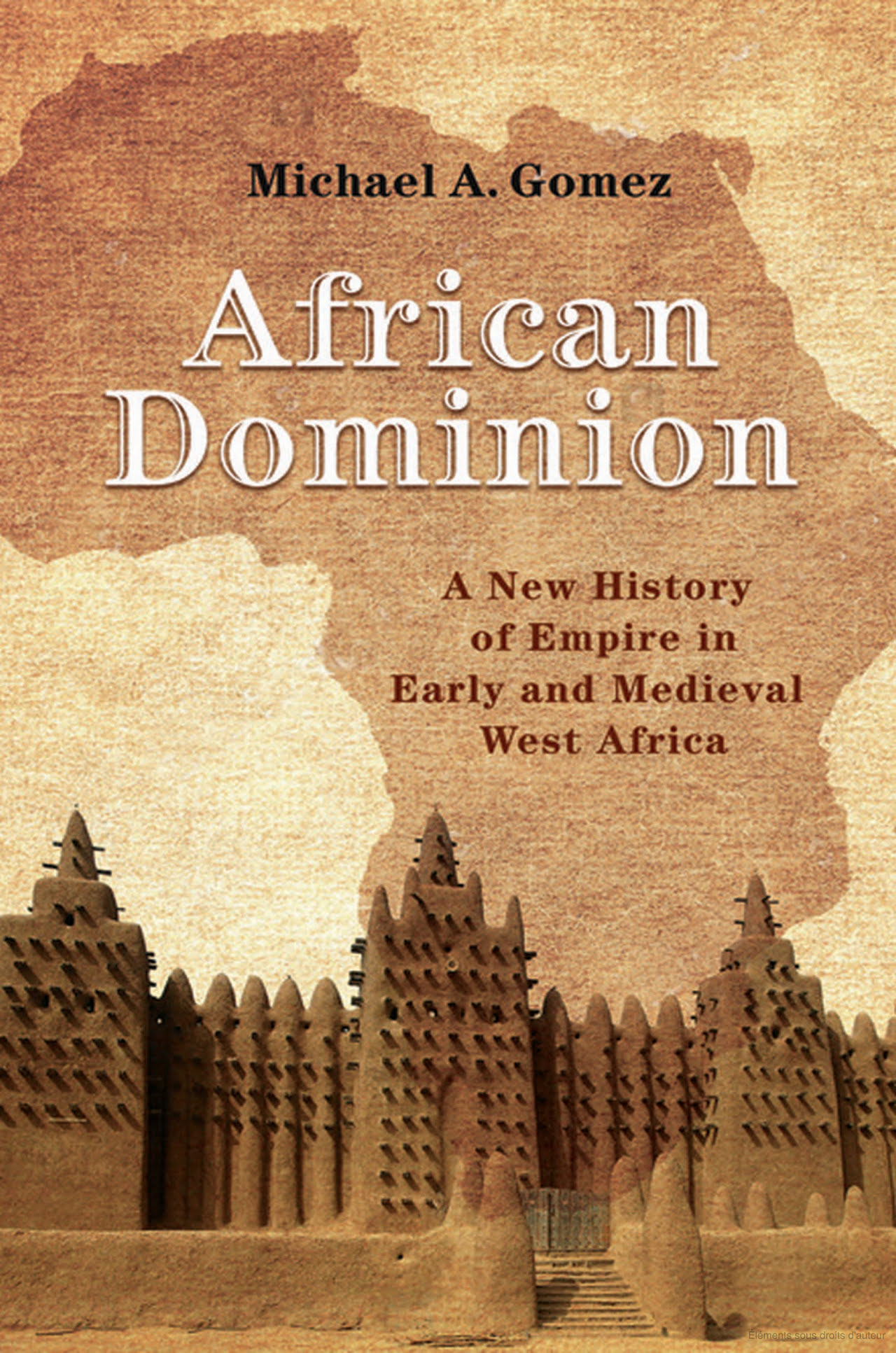
"A groundbreaking history that puts early and medieval West Africa in a global context
Pick up almost any book on early and medieval world history and empire, and where do you find West Africa ? On the periphery. This pioneering book, the first on this period of the region’s history in a generation, tells a different story. Interweaving political and social history and drawing on a rich array of sources, including Arabic manuscripts, oral histories, and recent archaeological findings, Michael Gomez unveils a new vision of how categories of ethnicity, race, gender, and caste emerged in Africa and in global history more generally. Scholars have long held that such distinctions arose during the colonial period, but Gomez shows they developed much earlier.
Focusing on the Savannah and Sahel region, Gomez traces the exchange of ideas and influences with North Africa and the Central Islamic Lands by way of merchants, scholars, and pilgrims. Islam’s growth in West Africa, in tandem with intensifying commerce that included slaves, resulted in a series of political experiments unique to the region, culminating in the rise of empire. A major preoccupation was the question of who could be legally enslaved, which together with other factors led to the construction of new ideas about ethnicity, race, gender, and caste—long before colonialism and the transatlantic slave trade.
Telling a radically new story about early Africa in global history, African Dominion is set to be the standard work on the subject for many years to come."
african-dominion-toc.pdf
Michael A.Gomez is the Silver Professor of History and Middle Eastern and Islamic Studies at New York University. His books include Black Crescent : African Muslims in the Americas ; Exchanging Our Country Marks : The Transformation of African Identities in the Colonial and Antebellum South ; Reversing Sail : A History of the African Diaspora ; and Pragmatism in the Age of Jihad : The Precolonial State of Bundu. -
Paru récemment A short history of Transatlantic Slavery de Kenneth
Morgan chez I.B. TaurisLe 6 mars 2018 à 11h12
Paru récemment A short history of Transatlantic Slavery de Kenneth
Morgan chez I.B. Tauris, 2016, 256 p. ISBN : 9781780763866 Prix : 77 £.
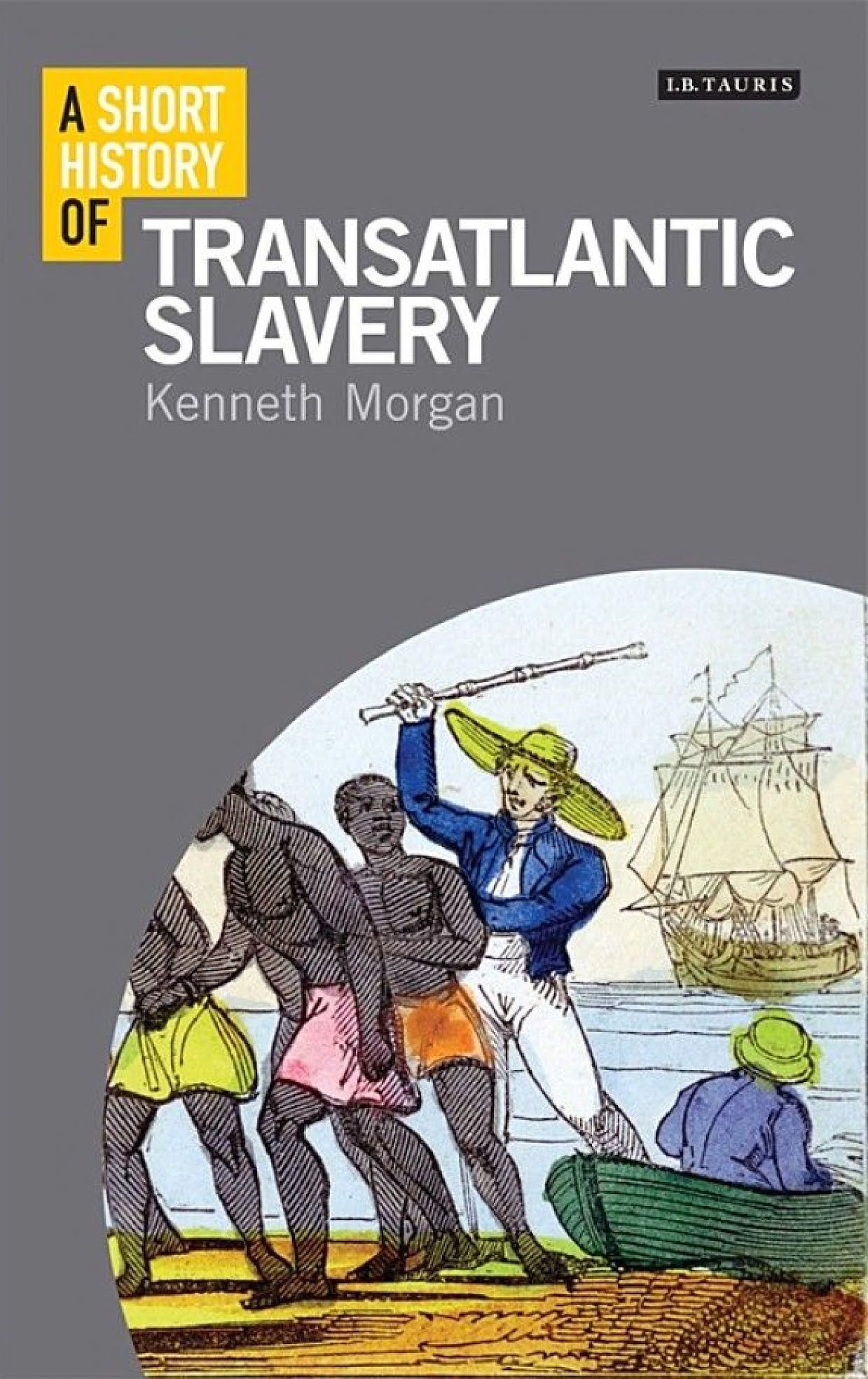
"From 1501, when the first slaves arrived in Hispaniola, until the nineteenth century, some twelve million people were abducted from west Africa and shipped across thousands of miles of ocean - the infamous Middle Passage - to work in the colonies of the New World. Perhaps two million Africans died at sea. Why was slavery so widely condoned, during most of this period, by leading lawyers, religious leaders, politicians and philosophers ? How was it that the educated classes of the western world were prepared for so long to accept and promote an institution that would later ages be condemned as barbaric ? Exploring these and other questions - and the slave experience on the sugar, rice, coffee and cotton plantations - Kenneth Morgan discusses the rise of a distinctively Creole culture ; slave revolts, including the successful revolution in Haiti (1791-1804) ; and the rise of abolitionism, when the ideas of Montesquieu, Wilberforce, Quakers and others led to the slave trade’s systemic demise. At a time when the menace of human trafficking is of increasing concern worldwide, this timely book reflects on the deeper motivations of slavery as both ideology and merchant institution."
KennethMorgan is Professor of History at Brunel University. He is the author of Bristol and the Atlantic Trade in the Eighteenth Century (1993), Slavery, Atlantic Trade and the British Economy, 1660-1800 (2000), Slavery and the British Empire : From Africa to America (2007) and Australia : A Very Short Introduction (2012). -
Paru récemment Asian Slaves in Colonial Mexico. From Chinos to Indians de Tatiana
Seijas aux Cambridge UPLe 6 mars 2018 à 10h35
Paru récemment Asian Slaves in Colonial Mexico. From Chinos to Indians de Tatiana
Seijas aux Cambridge University Press, "Cambridge Latin American Studies", 2015, 300 p. ISBN : 9781107635777 Prix : 20,99 £ (existe aussi en version électronique).
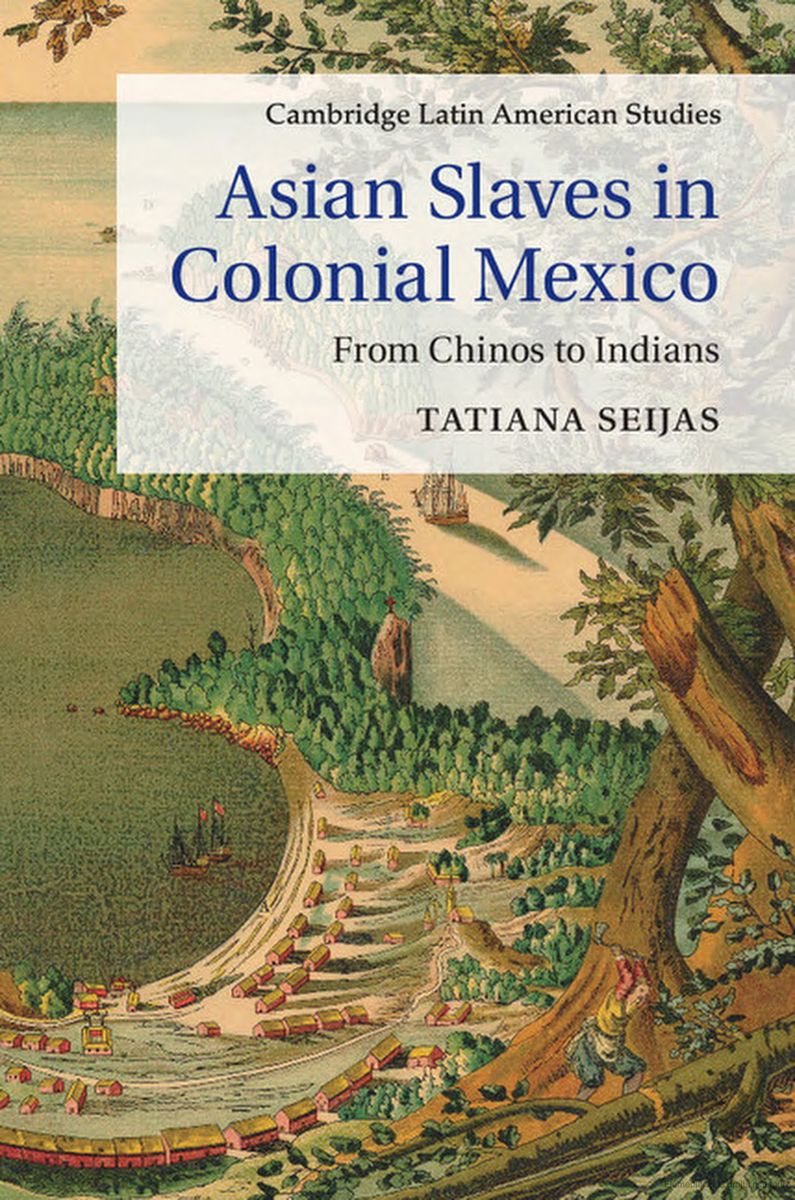
"During the late sixteenth and seventeenth centuries, countless slaves from culturally diverse communities in the Indian subcontinent and Southeast Asia journeyed to Mexico on the ships of the Manila Galleon. Upon arrival in Mexico, they were grouped together and categorized as chinos. Their experience illustrates the interconnectedness of Spain’s colonies and the reach of the crown, which brought people together from Africa, the Americas, Asia and Europe in a historically unprecedented way. In time, chinos in Mexico came to be treated under the law as Indians, becoming indigenous vassals of the Spanish crown after 1672. The implications of this legal change were enormous : as Indians, rather than chinos, they could no longer be held as slaves. Tatiana Seijas tracks chinos’ complex journey from the slave market in Manila to the streets of Mexico City, and from bondage to liberty. In doing so, she challenges commonly held assumptions about the uniformity of the slave experience in the Americas."
asian-slaves-colonial-mexico-toc.pdf
TatianaSeijas is Associate Professor of History at Pennsylvania State University.