
Le site web de la Société française d’histoire des outre-mers (S
Articles les plus récents
-
Hors-Série Concours de la S
fhom - Capes et Agrégation d’histoire, 2022-2025Commander (10 €) le hors-série Histoire coloniale et impériale de l’Afrique :
https://www.payasso.fr/librairie-sfhom/commandes
-
Vient de paraître The Yellow Demon of Fever. Fighting Disease in the Nineteenth-Century Transatlantic Slave Trade de Manuel
Barcia aux Yale University PressLe 30 avril 2020 à 23h06
Vient de paraître The Yellow Demon of Fever. Fighting Disease in the Nineteenth-Century Transatlantic Slave Trade de Manuel
Barcia aux Yale University Press, 2020, 296 p. ISBN : 9780300215854 Prix : 65 $.
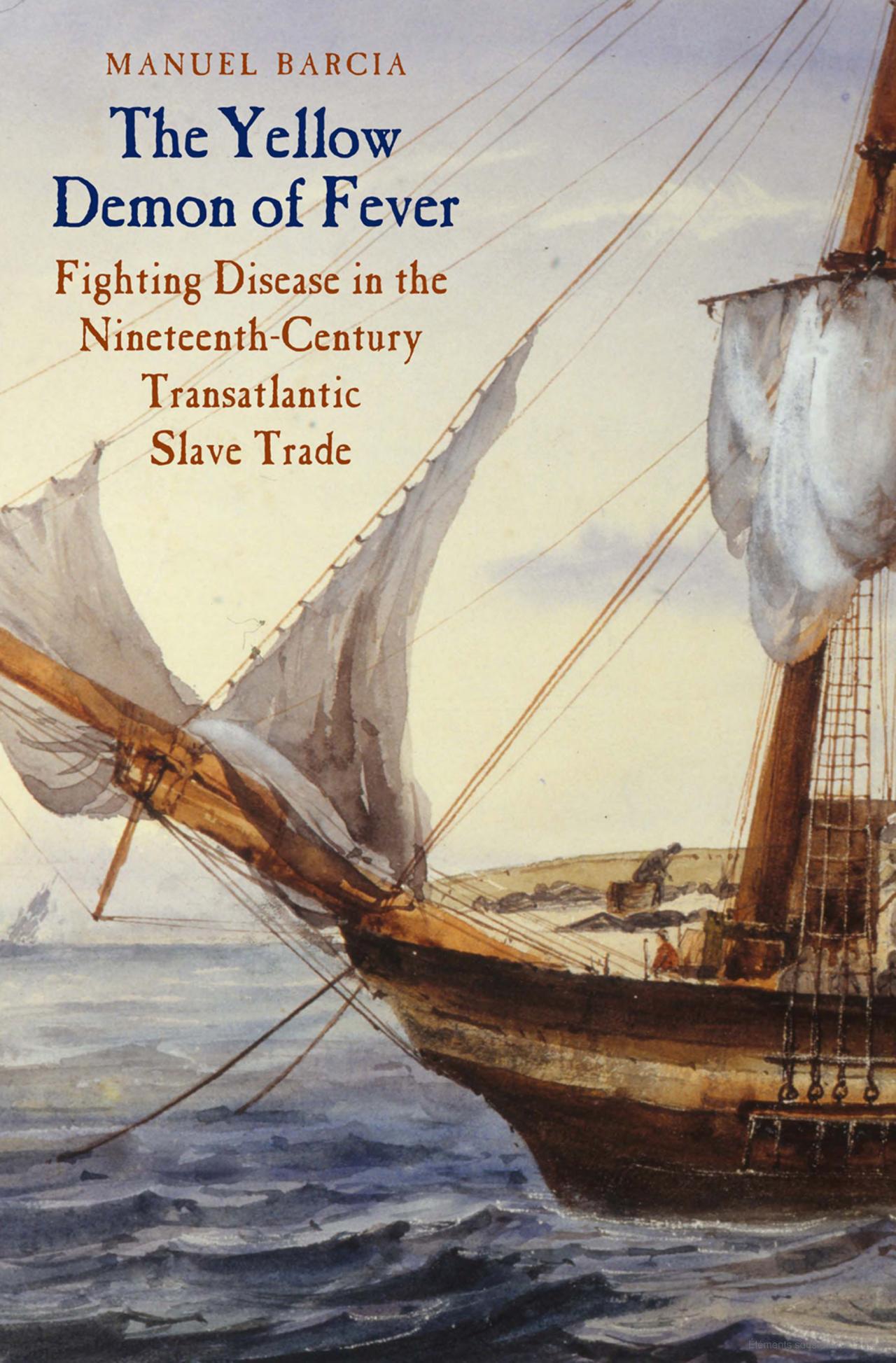
"A pathbreaking history of how participants in the slave trade influenced the growth and dissemination of medical knowledge
As the slave trade brought Europeans, Africans, and Americans into contact, diseases were traded along with human lives. Manuel Barcia examines the battle waged against disease, where traders fought against loss of profits while enslaved Africans fought for survival. Although efforts to control disease and stop epidemics from spreading brought little success, the medical knowledge generated by people on both sides of the conflict contributed to momentous change in the medical cultures of the Atlantic world."
manuel-barcia-yellow-demon-fever-toc.pdf
ManuelBarcia (https://twitter.com/mbarcia24) is chair of global history at the University of Leeds and a recipient of the Philip Leverhulme Prize in History. -
Vient de paraître le dossier "Traites esclavagistes et mémoire culturelle" de la revue Ethnologie française aux PUF
Le 27 avril 2020 à 15h01
Vient de paraître le dossier "Traites esclavagistes et mémoire culturelle" de la revue Ethnologie française aux PUF, n° 1-2020 (t. 165), 240 p. ISBN : 978-2-13-082319-3 Prix : 24 €.
La revue et le dossier "Traites esclavagistes et mémoire culturelle" sont également disponibles, en version payante, sur Cairn.info.
"Depuis quelques décennies, le passé de l’esclavage est devenu une question sociétale importante et dont la charge politique est considérable. Issus de recherches concernant des contextes africains, américains et européens, les articles ici réunis interrogent les gestes, les récits et les visions propres à l’institution globalisée et plurielle d’une mémoire culturelle des traites négrières. Une telle mémoire est à l’œuvre dans la création de lieux, de monuments, de rituels ou de discours dont la quête de consensus ou de réparation n’est pas sans soulever, parfois, de vives polémiques et de fortes tensions. Ainsi, ce dossier vise à montrer les manières dont le souvenir du passé esclavagiste se manifeste également par le biais de postures morales, de revendications identitaires et d’émotions. Analyser les enjeux sous-jacents de reconnaissance, d’héritage, de dette qui gouvernent ces fabrications mémorielles est l’un des objectifs de cette livraison."
sommaire-ethnologie-2020-1.pdf
-
Vient de paraître Liberated Africans and the Abolition of the Slave Trade, 1807-1896 sous la direction de Richard
Anderson et Henry B.Lovejoy aux University of Rochester PressLe 27 avril 2020 à 14h21
Vient de paraître Liberated Africans and the Abolition of the Slave Trade, 1807-1896 sous la direction de Richard
Anderson et Henry B.Lovejoy aux University of Rochester Press (Boydell & Brewer), coll. "Rochester Studies in African History and the Diaspora", 2020, 480 p. ISBN : 9781580469692 Prix : 95 £ (existe aussi en version électronique).

"In 1807, Britain and the United States passed legislation limiting and ultimately prohibiting the transoceanic slave trade. As world powers negotiated anti-slave-trade treaties thereafter, British, Portuguese, Spanish, Brazilian, French, and US authorities seized ships suspected of illegal slave trading, raided slave barracoons, and detained newly landed slaves. The judicial processes in a network of the world’s first international courts of humanitarian justice not only resulted in the "liberation" of nearly two hundred thousand people but also generated an extensive archive of documents. Liberated Africans and the Abolition of the Slave Trade, 1807-1896 makes use of these records to illuminate the fates of former slaves, many of whom were released from bondage only to be conscripted into extended periods of indentured servitude.
Essays in this collection explore a range of topics related to those often referred to as "Liberated Africans"-a designation that, the authors show, should be met with skepticism. Contributors share an emphasis on the human consequences for Africans of the abolitionist legislation. The collection is deeply comparative, looking at conditions in British colonies such as Sierra Leone, the Gambia, and the Cape Colony as well as slave-plantation economies such as Brazil, Cuba, and Mauritius. A groundbreaking intervention in the study of slavery, abolition, and emancipation, this volume will be welcomed by scholars, students, and all who care about the global legacy of slavery."
anderson-lovejoy-liberated-africans-toc.pdf
RichardAnderson is a lecturer at the University of Exeter. Henry B.Lovejoy is an assistant professor at the University of Colorado, Boulder. -
Vient de paraître A History of West Central Africa to 1850 de John K.
Thornton aux Cambridge University PressLe 27 avril 2020 à 13h29
Vient de paraître A History of West Central Africa to 1850 de John K.
Thornton aux Cambridge University Press, coll. "New Approaches to African History", 2020, 386 p. ISBN : 9781107565937 Prix : 22,99 £ (existe aussi en version électronique).

"Based on substantial new research from primary sources and archives, this accessible interpretative history of West Central Africa from earliest times to 1852 gives comprehensive and in-depth coverage of the region. With equal focus given to both internal histories or inter-state interactions and external dynamics and relationships, this study represents an original approach to regional histories which goes beyond the existing scholarship on the area. By contextualising and expanding its range, to include treatment of the Portuguese colony of Angola, John K. Thornton provides new understandings of significant events, people, and inter-regional interactions which aid the grounding of the history of West Central Africa within a broader context. A valuable resource to students and scholars of African history."
thornton-west-central-africa-toc.pdf
John K.Thornton (https://twitter.com/Mvemba91) is Professor of History at Boston University where he is a specialist in the history of pre-colonial Africa and the African Diaspora. He is the author of numerous books, including Africa and Africans in the Making of the Atlantic World (1992, 2nd edition 1998), The Kongolese Saint Anthony (1998), Central Africans, Atlantic Creoles and the Foundation of the Americas (2007) which was awarded the Herskovits Prize by the African Studies Association, and A Cultural History of the Atlantic World (2012) which was awarded the World History Association Book Prize. -
Vient de paraître Atlantic Transformations. Empire, Politics, and Slavery during the Nineteenth Century sous la direction de Dale W.
Tomich aux SUNY PressLe 16 avril 2020 à 15h37
Vient de paraître Atlantic Transformations. Empire, Politics, and Slavery during the Nineteenth Century sous la direction de Dale W.
Tomich aux SUNY Press (State University of New York Press), coll. "Fernand Braudel Center Studies in Historical Social Science", 2020, 254 p. ISBN : 978-1-4384-7785-5 Prix : 95 $ (existe aussi en version électronique).
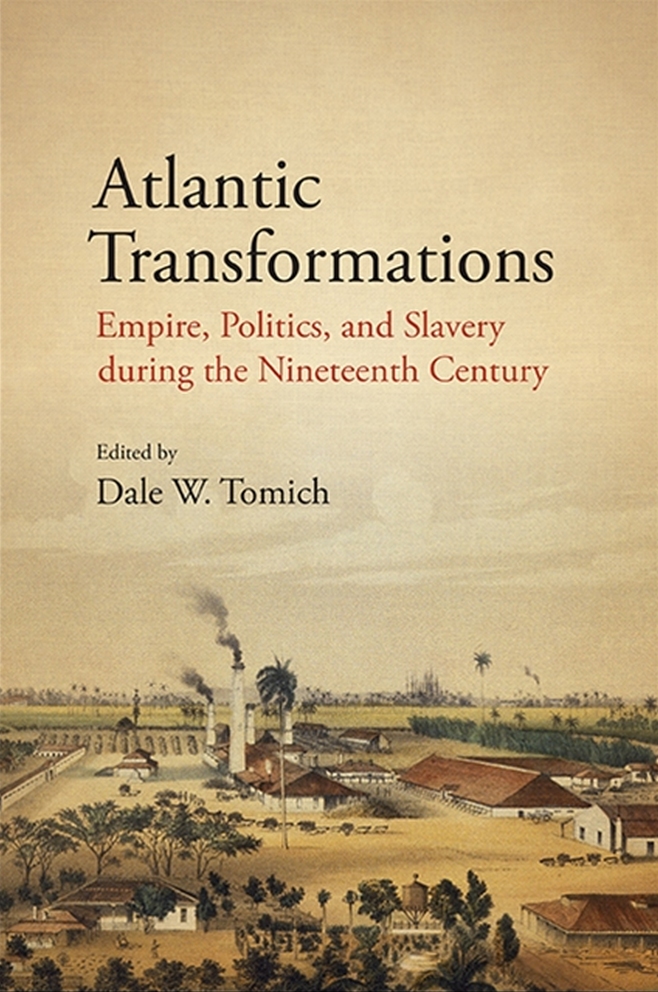
"This book presents a new approach to nineteenth-century Atlantic history by extending the analytical perspective of the second slavery to questions of empire, colonialism, and slavery. With a focus on Latin America, Brazil, the Spanish Caribbean, and the United States, international scholars examine relations among empires, between empires and colonies, and within colonies as parts of processes of global economic and political restructuring. By treating metropolis-colony relations within the framework of the modern world-economy, the contributors call attention to the political, economic, and cultural interdependence and interaction of global and local forces shaping the Atlantic world. They reinterpret as specific local responses to global processes the conflicts between empires, within imperial relations, the formation of national states, the creation of new zones of agricultural production and the decline of old ones, and the emergence of liberal ideologies and institutions."
atlantic-toc.pdf
Dale W.Tomich is Professor of Sociology at Binghamton University, State University of New York. He is the author of Slavery in the Circuit of Sugar, Martinique and the World-Economy, 1830–1848 and the editor of The Politics of the Second Slavery, both also published by SUNY Press. -
Vient de paraître Jamaica in the Age of Revolution de Trevor
Burnard aux University of Pennsylvania PressLe 16 avril 2020 à 15h07
Vient de paraître Jamaica in the Age of Revolution de Trevor
Burnard aux University of Pennsylvania Press, 2020, 400 p. ISBN : 9780812251920 Prix : 45 $ (existe aussi en version électronique).
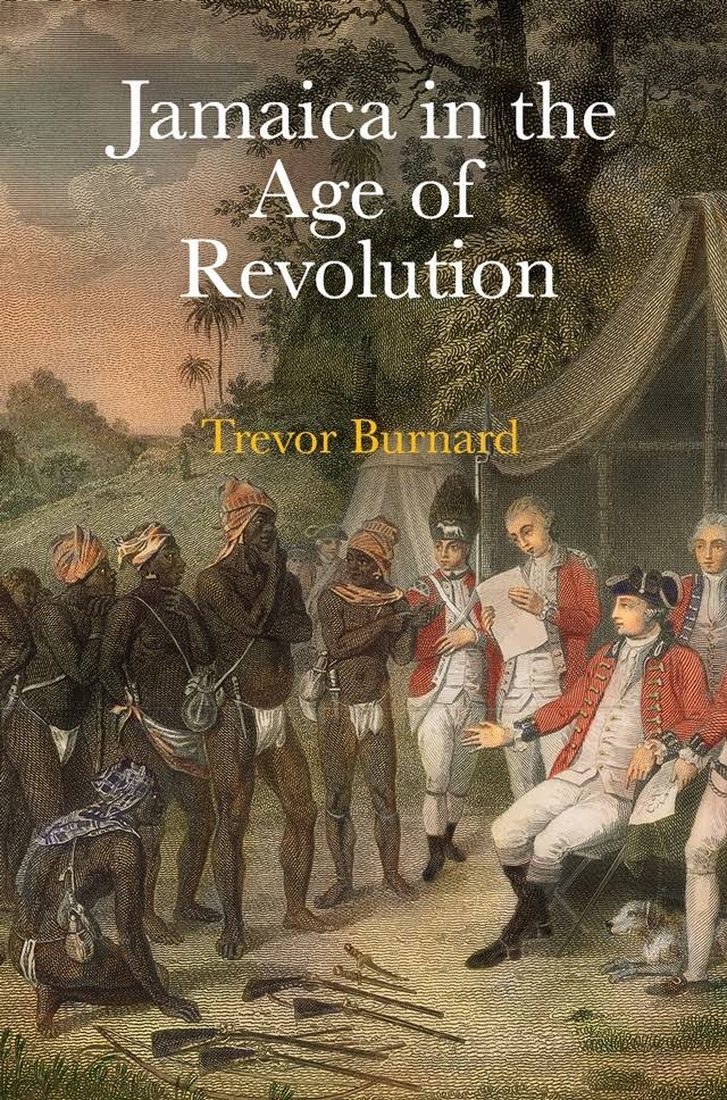
"Between the start of the Seven Years’ War in 1756 and the onset of the French Revolution in 1789, Jamaica was the richest and most important colony in British America. White Jamaican slaveowners presided over a highly productive economic system, a precursor to the modern factory in its management of labor, its harvesting of resources, and its scale of capital investment and ouput. Planters, supported by a dynamic merchant class in Kingston, created a plantation system in which short-term profit maximization was the main aim. Their slave system worked because the planters who ran it were extremely powerful.
In Jamaica in the Age of Revolution, Trevor Burnard analyzes the men and women who gained so much from the labor of enslaved people in Jamaica to expose the ways in which power was wielded in a period when the powerful were unconstrained by custom, law, or, for the most part, public approbation or disapproval. Burnard finds that the unremitting war by the powerful against the poor and powerless, evident in the day-to-day struggles slaves had with masters, is a crucial context for grasping what enslaved people had to endure.
Examining such events as Tacky’s Rebellion of 1760 (the largest slave revolt in the Caribbean before the Haitian Revolution), the Somerset decision of 1772, and the murder case of the Zong in 1783 in an Atlantic context, Burnard reveals Jamiaca to be a brutally effective and exploitative society that was highly adaptable to new economic and political circumstances, even when placed under great stress, as during the American Revolution. Jamaica in the Age of Revolution demonstrates the importance of Jamaican planters and merchants to British imperial thinking at a time when slavery was unchallenged."
trevor-burnard-jamaica-revolution-toc.pdf
TrevorBurnard is Wilberforce Professor of Slavery and Emancipation and Director of the Wilberforce Institute, University of Hull. He is coauthor, with John Garrigus, of The Plantation Machine : Atlantic Capitalism in French Saint-Domingue and British Jamaica, also available from the University of Pennsylvania Press. -
Vient de paraître Atlantic in World History, 1490-1830 de Trevor
Burnard chez BloomsburyLe 16 avril 2020 à 14h50
Vient de paraître Atlantic in World History, 1490-1830 de Trevor
Burnard chez Bloomsbury, 2020, 344 p. ISBN : 9781350073524 Prix : 24,46 $ (existe également en version électronique).
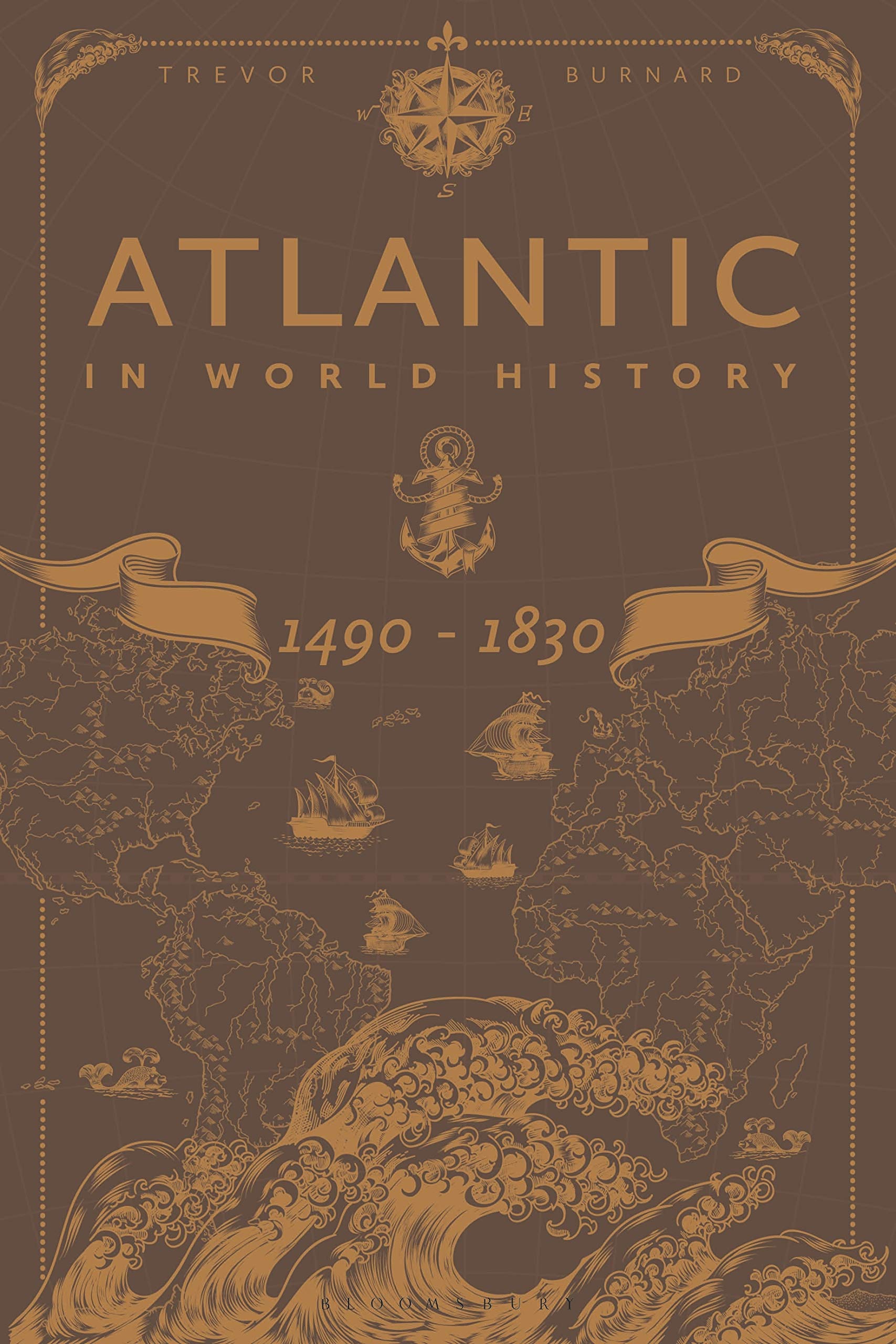
"The Atlantic in World History, 1490-1830 looks at the historical connections between four continents – Africa, Europe, North America and South America – through the lens of Atlantic history. It shows how the Atlantic has been more than just an ocean : it has been an important site of circulation and transmission, allowing exchanges and interchanges which have profoundly shaped the development of the world.
Divided into four thematic sections, Trevor Burnard’s sweeping yet concise narrative covers the period from the voyages of Columbus to the New World in the 1490s through to the end of the Age of Revolutions around 1830. It deals with key topics including the Columbian exchange, Atlantic slavery and abolition, war as a global phenomenon, the Age of Revolution, religious conversion, nation-building, trade and commerce and intellectual movements such as the Enlightenment. Rather than focusing on the ’rise of the West’, Burnard stresses the interactive nature of encounters between various parts of the world, setting local case studies within his broader interconnected narrative.
Written by a leading historian of Atlantic history, and including further reading lists, images and maps as well as a companion website featuring discussion questions, timelines and primary source extracts, this is an essential book for students of Atlantic and world history."
trevor-burnard-atlantic-world-history-toc.pdf
TrevorBurnard is Wilberforce Professor of Slavery and Emancipation and Director of the Wilberforce Institute, University of Hull, UK. Among his major works are The Plantation Machine : Atlantic Capitalism in French Saint-Domingue and British Jamaica (2016), Planters, Merchants, and Slaves : Plantation Societies in British America, 1650-1820 (2015), Mastery, Tyranny and Desire : Thomas Thistlewood and His Slaves in the Anglo-Jamaican World (2004) and Creole Gentlemen : The Maryland Elite, 1691-1776 (2002). He is also the Editor in Chief of the Oxford Bibliographies in Atlantic History. -
Appel à communication pour le Colloque "Terres australes et antarctiques françaises" (Archives nationales, 14-15 décembre 2020)
Le 16 avril 2020 à 14h05
Appel à communication pour le Colloque
’Terres australes et antarctiques françaises’
Archives nationales
14-15 décembre 2020
Appel à communication jusque fin mai 2020.
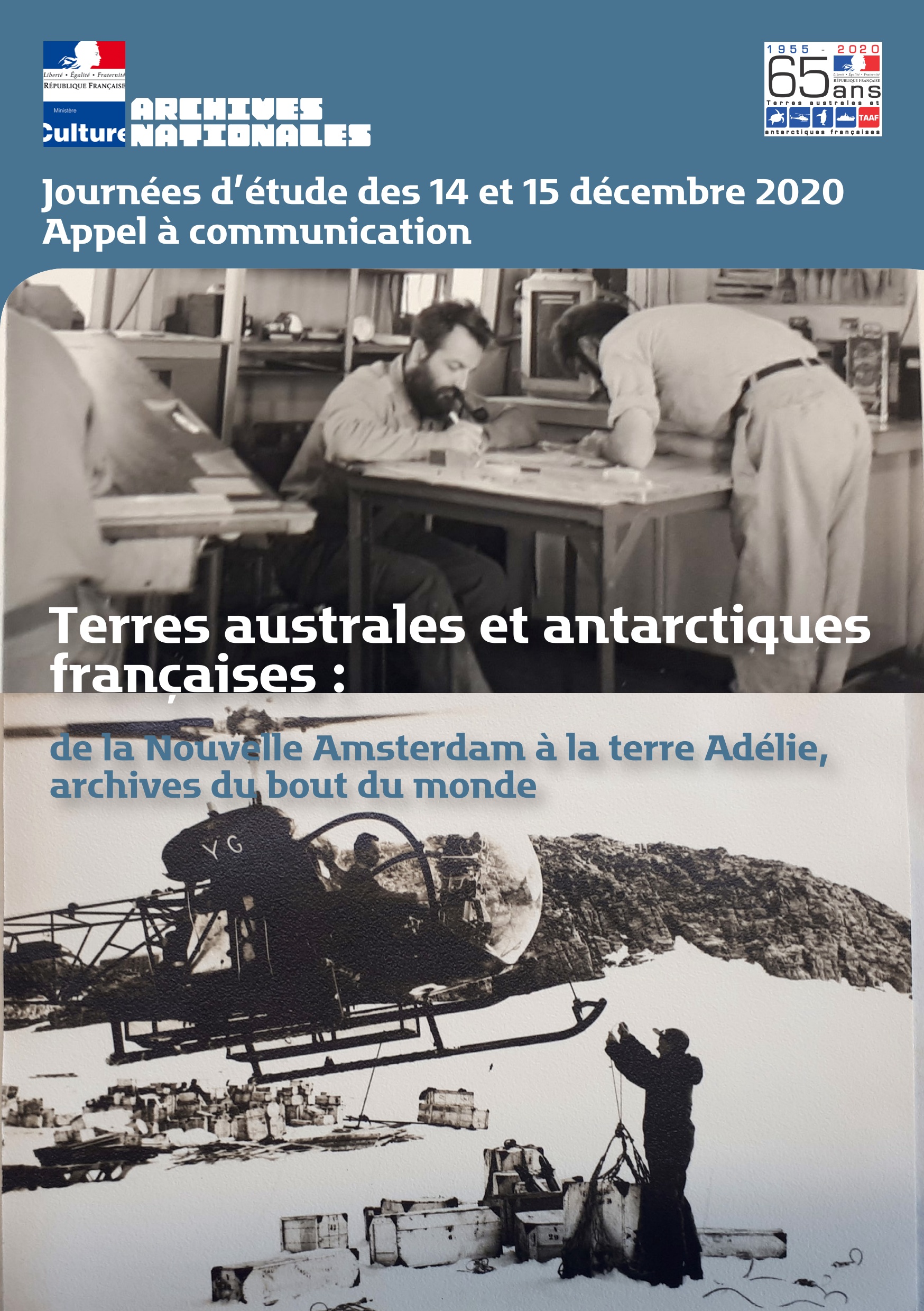
"Dans le cadre du 65e anniversaire de la loi du 6 août 1955 portant statut des Terres australes et antarctiques françaises, les Archives nationales et la collectivité des Terres australes et antarctiques françaises proposent deux journées d’étude, les 14 et 15 décembre 2020, organisées au siège des Archives nationales à Pierrefitte-sur-Seine. Un appel à communication, ouvert à tous, est lancé."
APPEL À COMMUNICATION
Contexte
La loi n° 55-1052 du 6 août 1955 accorde l’autonomie administrative et financière à un nouveau territoire d’outre-mer : les Terres australes et antarctiques françaises [TAAF].
Les archipels et îles subantarctiques Crozet, Kerguelen, Saint-Paul et Amsterdam, et la Terre Adélie en Antarctique deviennent ainsi les quatre districts d’un territoire à l’isolement et à l’éparpillement extrêmes, avec la particularité supplémentaire de n’avoir aucun habitant permanent. Hors du champ géographique et temporel de la loi de 1955, et donc des présentes journées d’étude, les îles Éparses formeront en 2007 le 5e district des TAAF.
Approchés pour certains par les hommes dès le XVIe siècle, ces territoires sont marqués par un temps de conquête au nom d’un souverain. Puis les particularités de ces espaces naturels, quasiment vierges de tout contact humain, suscitent le temps des revendications politiques et des espoirs économiques.
Si les enjeux de régulation économique puis stratégiques nécessitent la définition d’un mode de gouvernance adapté et la fixation d’un cadre juridique, la recherche et la conservation vont, en parallèle à la nécessité d’un encadrement strict des activités de pêche dans les Australes, conduire à l’élaboration d’un cadre réglementaire assurant la conciliation entre activités humaines et protection de l’environnement, en accord avec les engagements internationaux pris par la France.
Objectifs
Il existe aujourd’hui des fonds d’archives publiques et privées importants sur ces champs géographiques, historiques, scientifiques et politiques des TAAF. L’objectif multiple de ces journées d’étude sera de valoriser l’existence de ces fonds d’archives, d’en mesurer le potentiel, d’encourager la recherche pour documenter les histoires du territoire et des missions, et de faciliter l’émergence de nouveaux travaux et documents.
Ce sont en effet plusieurs histoires qui se jouent en même temps :
◊ celle de territoires définis tant par le physique que par le symbolique ;
◊ celle d’une institution fruit de la volonté publique, dont le champ de compétences, les personnels, les pratiques et les moyens évoluent au gré des textes normatifs, des nouvelles priorités, du stratégique à la recherche scientifique et à la conservation ;
◊ celle des expériences qui y ont été menées et des avancées technologiques que ces dernières ont permises et qui n’auraient peut-être pu avoir lieu dans un autre cadre ;
◊ celle des hommes et des femmes marqués dans leur cœur et dans leur chair par leur passage sur ces territoires, sources d’inspiration et d’un imaginaire dont les limites ne sont toujours pas identifiées.
Axes d’études
Quatre axes ont été définis, autour desquels se déclineront les journées d’étude par demi-journées organisées entre contributions et tables rondes :
I. De la découverte à l’exploitation, histoire d’implantations humaines
Quels événements majeurs ont marqué l’histoire des îles subantarctiques et de la terre Adélie ? Comment les activités anthropiques ont-elles façonné/affecté ces territoires ?
II. Des territoires à l’entité juridique
Quelles ont été les grandes étapes politiques et juridiques permettant d’arriver à la création sui generis du nouveau territoire d’outre-mer des TAAF en 1955 ? Quels furent les enjeux et les problématiques spécifiques en terre Adélie ? Le statut actuel est-il adapté aux missions de la collectivité ?
III. Un observatoire du monde
Les îles Australes et la terre Adélie possèdent un patrimoine naturel unique et une situation géographique exceptionnelle : comment les politiques publiques de recherche et de conservation s’y sont-elles déclinées ? Quels champs d’études et de gestion ont émergé et comment ont-ils évolué ?
IV. Terres rêvées, terres vécues
Crozet, Kerguelen, Saint-Paul et Amsterdam, terre Adélie : autant de noms qui furent sources d’inspiration depuis leur découverte. Entre mission et sacerdoce : quelle expérience ceux qui ont vécu leur « rêve » aux TAAF ont-ils rapportée ? Comment cet imaginaire austral ou antarctique s’est-il transformé à travers les siècles ?
taaf_appel_v_definitive.pdf
Format des propositions de projet de communication
Le Comité d’organisation favorisera les projets de communication construits à partir de l’étude de documents (écrit, audio, vidéo, photo) issus de fonds d’archives publiques ou privées.
Les propositions de projet de communication prendront la forme d’un texte de 2000 signes maximum espaces comprises (résumé et liste des sources étudiées), accompagné de 5 lignes de biographie et des coordonnées téléphoniques et électroniques de l’auteur de la communication.
Adresse électronique d’expédition des propositions :
journeesetudes2020TAAF-AN@taaf.re
Calendrier
Délai de réception des projets de communication : 31 mai 2020
Date limite de réponse du comité d’organisation aux propositions : 30 juin 2020
Date de réception finale des communications retenues : 15 novembre 2020
Date des Journées d’étude : 14 et 15 décembre 2020
Les journées d’étude seront en accès libre, sur inscription obligatoire.
Publication
Les actes des journées d’étude feront l’objet d’une publication en format électronique
sur la plate-forme OpenEdition Books.
Nous tenons à remercier très chaleureusement Gilles Le Berre, Conservateur du Patrimoine aux Archives nationales, de nous avoir communiqué ce précieux appel à communication. -
Vient de paraître The Spanish Caribbean and the Atlantic World in the Long Sixteenth Century sous la direction d’Ida
Altman et DavidWheat aux University of Nebraska PressLe 8 avril 2020 à 19h49
Vient de paraître The Spanish Caribbean and the Atlantic World in the Long Sixteenth Century sous la direction d’Ida
Altman et DavidWheat aux University of Nebraska Press, 2019, 330 p. ISBN : 978-0-8032-9957-3 Prix : 40 $ (existe aussi en version électronique).
La version électronique de l’ouvrage (pdf) est téléchargeable gratuitement sur la plateforme Project MUSE, pendant la durée du confinement.
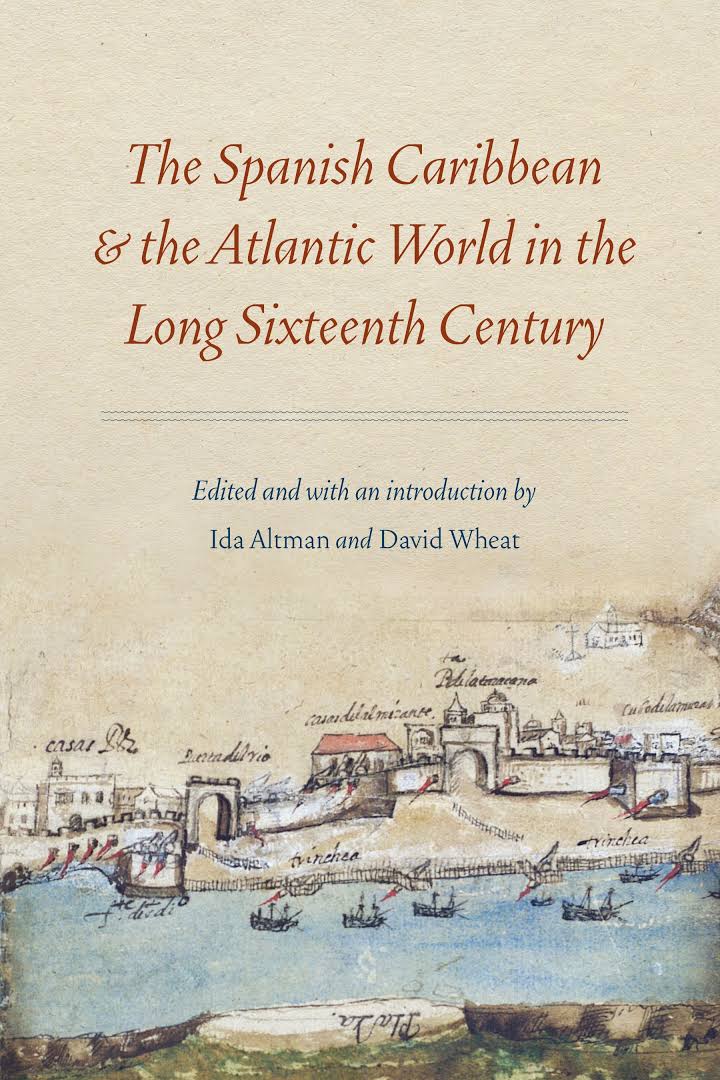
"The Spanish Caribbean and the Atlantic World in the Long Sixteenth Century breaks new ground in articulating the early Spanish Caribbean as a distinct and diverse group of colonies loosely united under Spanish rule for roughly a century prior to the establishment of other European colonies.
In the sixteenth century no part of the Americas was more diverse ; international ; or as closely tied to Spain, the islands of the Atlantic, western Africa, and the Spanish American mainland than the Caribbean. The Caribbean experienced rapid growth during this period, displayed considerable ethnic and religious diversity, developed extensive networks of exchange both within and beyond the region, and played an important role in the broader Spanish colonization of the Americas. Contributors address topics such as the role of religious orders, the development of transatlantic and regional commercial systems, insular and regional political dynamics in relation to imperial objectives, the formation of colonial society, and the effects on Caribbean colonial society of the importation and incorporation of large numbers of indigenous captives and enslaved Africans."
altman-wheat-toc.pdf
IdaAltman is a professor emerita of history at the University of Florida. She is the author, coauthor, or editor of several books, including Emigrants and Society : Extremadura and Spanish America in the Sixteenth Century and The War for Mexico’s West : Spaniards and Indians in New Galicia, 1524–1550. DavidWheat is an associate professor of history at Michigan State University. He is the author of Atlantic Africa and the Spanish Caribbean, 1570–1640. -
Quelques Leçons du Collège de France à retrouver aux Éditions du Collège de France et sur OpenEdition Books
Le 8 avril 2020 à 16h35
Quelques Leçons du Collège de France à retrouver
aux Éditions du Collège de France &
sur OpenEdition Books

On signaler avec le plus grand intérêt, parmi les nombreuses leçons disponibles sur OpenEdition Books, les leçons suivantes :
– Leçons de l’histoire de l’Afrique. Leçon inaugurale prononcée le jeudi 3 octobre 2019 par François-Xavier Fauvelle
– Littérature haïtienne : urgence(s) d’écrire, rêve(s) d’habiter. Leçon inaugurale prononcée le jeudi 21 mars 2019 par Yanick Lahens
– Objets du désir, désir d’objets. Leçon inaugurale prononcée le jeudi 30 mars 2017 par Bénédicte Savoy
– Lettres noires : des ténèbres à la lumière. Leçon inaugurale prononcée le jeudi 17 mars 2016 par Alain Mabanckou
– Ce que peut l’histoire. Leçon inaugurale prononcée le jeudi 17 décembre 2015 par Patrick Boucheron
– Aux origines de l’histoire globale. Leçon inaugurale prononcée le jeudi 28 novembre 2013 par Sanjay Subrahmanyam
– Étude comparée des sociétés africaines. Leçon inaugurale prononcée le vendredi 25 février 1983 par Françoise Héritier.