
Le site web de la Société française d’histoire des outre-mers (S
Articles les plus récents
-
Hors-Série Concours de la S
fhom - Capes et Agrégation d’histoire, 2022-2025Commander (10 €) le hors-série Histoire coloniale et impériale de l’Afrique :
https://www.payasso.fr/librairie-sfhom/commandes
-
Vient de paraître Lettres à Clarisse d’Élisée
Reclus chez Classiques GarnierLe 21 février 2019 à 11h41
Vient de paraître Lettres à Clarisse d’Élisée
Reclus chez Classiques Garnier, coll. "Correspondances et mémoires" (n° 30), 2018, 182 p. ISBN : 978-2-406-07319-2 Prix : 32 €.
Édition de RonaldCreagh et ChristopheDeschler

"Ce livre existe d’abord pour les amoureux, les randonneurs et les randonneurs amoureux. L’auteur de ces lettres, Élisée Reclus, 29 ans, est un éternel marcheur. Jeune marié, il est follement amoureux de sa femme, Clarisse. On découvre dans on intimité un des plus grands géographes de l’histoire, son expérience professionnelle, ses explorations et sa vie de couple. Il est aussi un féministe et un écologiste avant l’heure. Cette époque où bouillonnent de nouvelles idées n’est pas sans rapport avec la nôtre, où la géographie se repense et où idées dominantes et internationalismes sont reconsidérés. Le style de ces lettres, regard festif sur « la nature libre », passionnera tout autant les spécialistes que ceux qui sont avides de découvertes."
lettres-a-clarisse-table-des-matieres.pdf
ÉliséeReclus inaugure sa "géographie sociale" par la pratique du voyage en 1859-1869. Ses lettres à sa femme Clarisse (métisse, elle est née à Saint-Louis du Sénégal en 1832), jusqu’ici inédites, révèlent les émois de la séparation et découvrent l’intimité du couple et de ses engagements. -
Vient de paraître Disciplining the Empire. Politics, Governance, and the Rise of the British Navy de Sarah
Kinkel aux Harvard University PressLe 19 février 2019 à 09h39
Vient de paraître Disciplining the Empire. Politics, Governance, and the Rise of the British Navy de Sarah
Kinkel aux Harvard University Press, coll. "Harvard Historical Studies" (vol. 189), 2018, 320 p. ISBN : 9780674976207 Prix : 40,50 €.
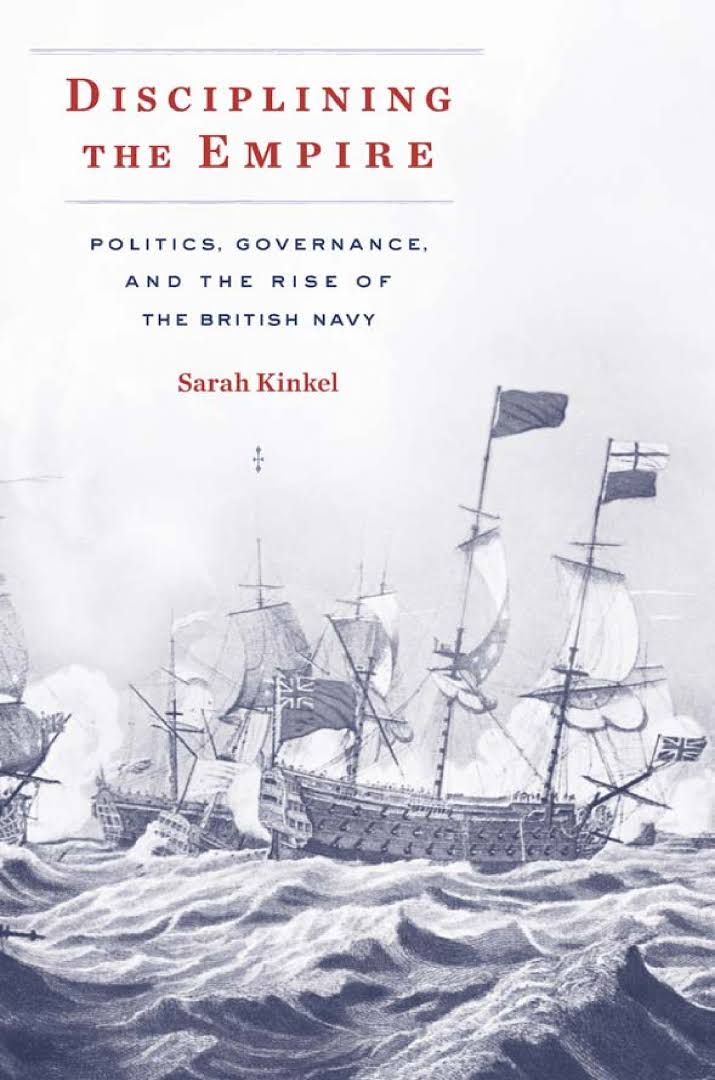
"“Rule Britannia ! Britannia rule the waves,” goes the popular lyric. The fact that the British built the world’s greatest empire on the basis of sea power has led many to assume that the Royal Navy’s place in British life was unchallenged. Yet, as Sarah Kinkel shows, the Navy was the subject of bitter political debate. The rise of British naval power was neither inevitable nor unquestioned : it was the outcome of fierce battles over the shape of Britain’s empire and the bonds of political authority.
Disciplining the Empire explains why the Navy became divisive within Anglo-imperial society even though it was also successful in war. The eighteenth century witnessed the global expansion of British imperial rule, the emergence of new forms of political radicalism, and the fracturing of the British Atlantic in a civil war. The Navy was at the center of these developments. Advocates of a more strictly governed, centralized empire deliberately reshaped the Navy into a disciplined and hierarchical force which they hoped would win battles but also help control imperial populations. When these newly professionalized sea officers were sent to the front lines of trade policing in North America during the 1760s, opponents saw it as an extension of executive power and military authority over civilians—and thus proof of constitutional corruption at home.
The Navy was one among many battlefields where eighteenth-century British subjects struggled to reconcile their debates over liberty and anarchy, and determine whether the empire would be ruled from Parliament down or the people up."
sarah-kinkel-disciplining-empire-toc.pdf
SarahKinkel is Assistant Professor of History at Ohio University.
Information diffusée sur Twitter par Anna Brinkman :
https://twitter.com/annakbrinkman/status/1097493103307575296 -
Vient de paraître Le sel. De l’esclavage à la mondialisation de Jean-Claude
Hocquet aux éditions du CNRSLe 19 février 2019 à 09h20
Vient de paraître Le sel. De l’esclavage à la mondialisation de Jean-Claude
Hocquet aux Éditions du CNRS, 2019, 328 p. ISBN : 978-2-271-11673-4 Prix : 25 €.
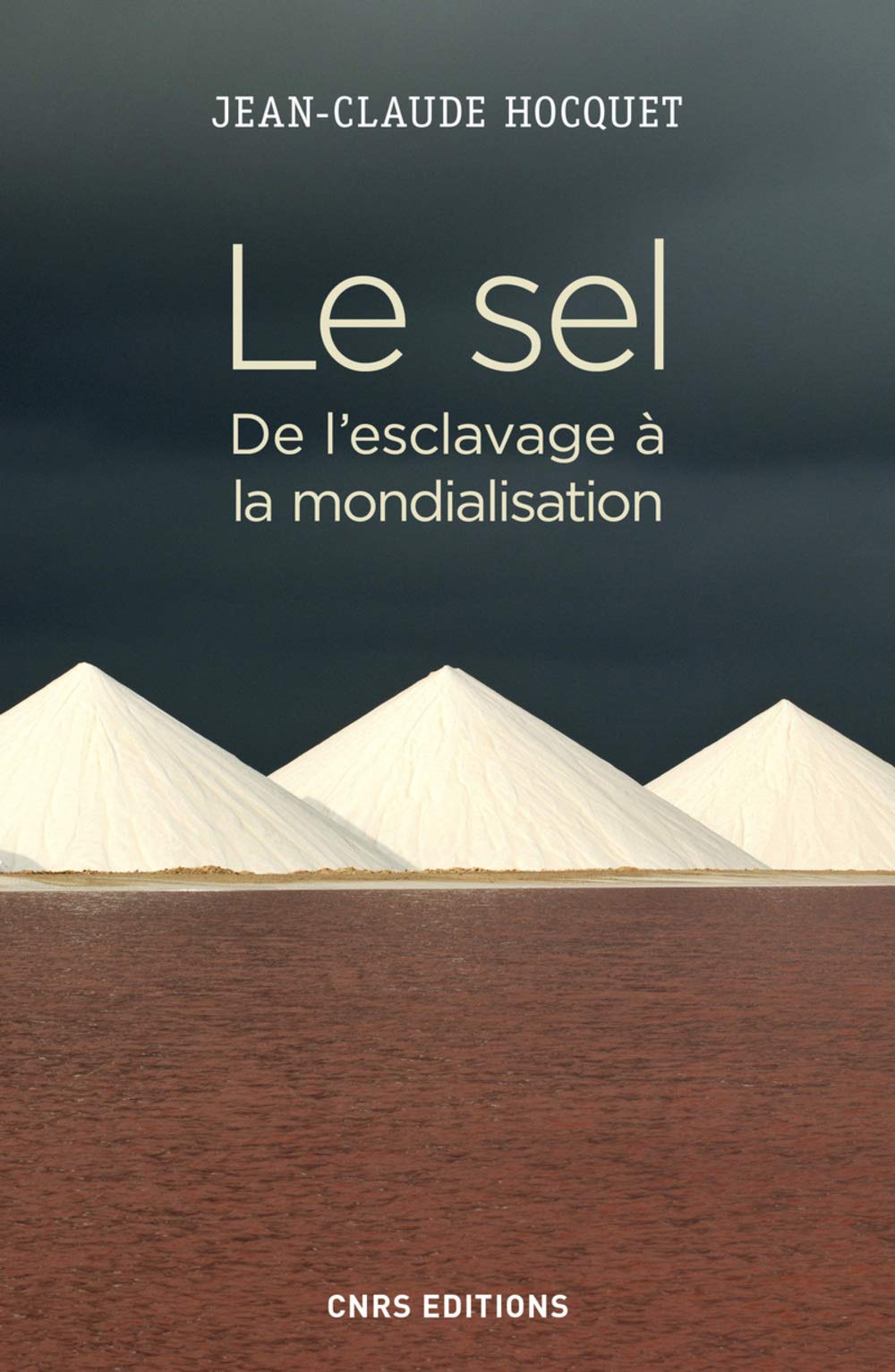
"Le sel, généreusement dispensé par la nature, a joué un rôle fondamental dans les diverses cultures humaines. Indispensable aux êtres vivants, présent dans chaque foyer, il donne saveur aux aliments, permet de les conserver et joue un rôle biologique important dans l’équilibre d’un organisme. Consommé par tous quotidiennement, on lui accorde également une valeur rituelle et symbolique, voire un pouvoir magique. Produit unique et abondant, il est néanmoins souvent caché, enfoui dans le sol ou bien en dissolution dans la mer. Les hommes ont donc fait preuve, depuis les temps préhistoriques, de beaucoup d’ingéniosité à l’extraire. Comment le sel est-il produit ? Où le trouve-t-on ? Comment s’échange-t-on cette denrée ? Qui en tire le meilleur profit ? En dix chapitres, dix études qui peuvent se lire séparément les unes des autres, le livre répond à ces questions.
On découvrira la peine des esclaves et des forçats dans les bagnes du sel, le partage des revenus au détriment des sauniers, la construction d’une saline fortifiée aux portes de la Camargue, les efforts des Suisses longtemps démunis pour faire venir le précieux minéral, l’entrée du sel dans l’économie mondialisée dès la fin du Moyen Âge, les flottes des puissances maritimes du nord de l’Europe qui traversent l’Atlantique à la recherche de ce produit stratégique, l’instauration de la gabelle dans un grand nombre d’États, etc. Grand produit agricole, minier, industriel et commercial, le sel est entré précocement dans la révolution industrielle, il a ensuite ouvert les voies de la mondialisation, accompagnant une fois de plus une grande mutation de l’économie-monde et ce, bien avant la fin du XXe siècle."
Jean-ClaudeHocquet , directeur de recherches au CNRS, est spécialiste du sel et de Venise à l’époque médiévale. Il est l’auteur des ouvrages Hommes et paysages du sel (Actes Sud, 2001), Venise au Moyen Age (Les Belles Lettres, 2003), et de Venise et la mer, XIIe-XVIIIe siècles (Fayard, 2006). -
Vient de paraître Caravans of Gold, Fragments in Time. Art, Culture, and Exchange across Medieval Saharan Africa sous la direction de Kathleen Bickford
Berzock aux Princeton University PressLe 19 février 2019 à 08h58
Vient de paraître Caravans of Gold, Fragments in Time. Art, Culture, and Exchange across Medieval Saharan Africa sous la direction de Kathleen Bickford
Berzock aux Princeton University Press, 2019, 312 p. ISBN : 9780691182681 Prix : 65 $.
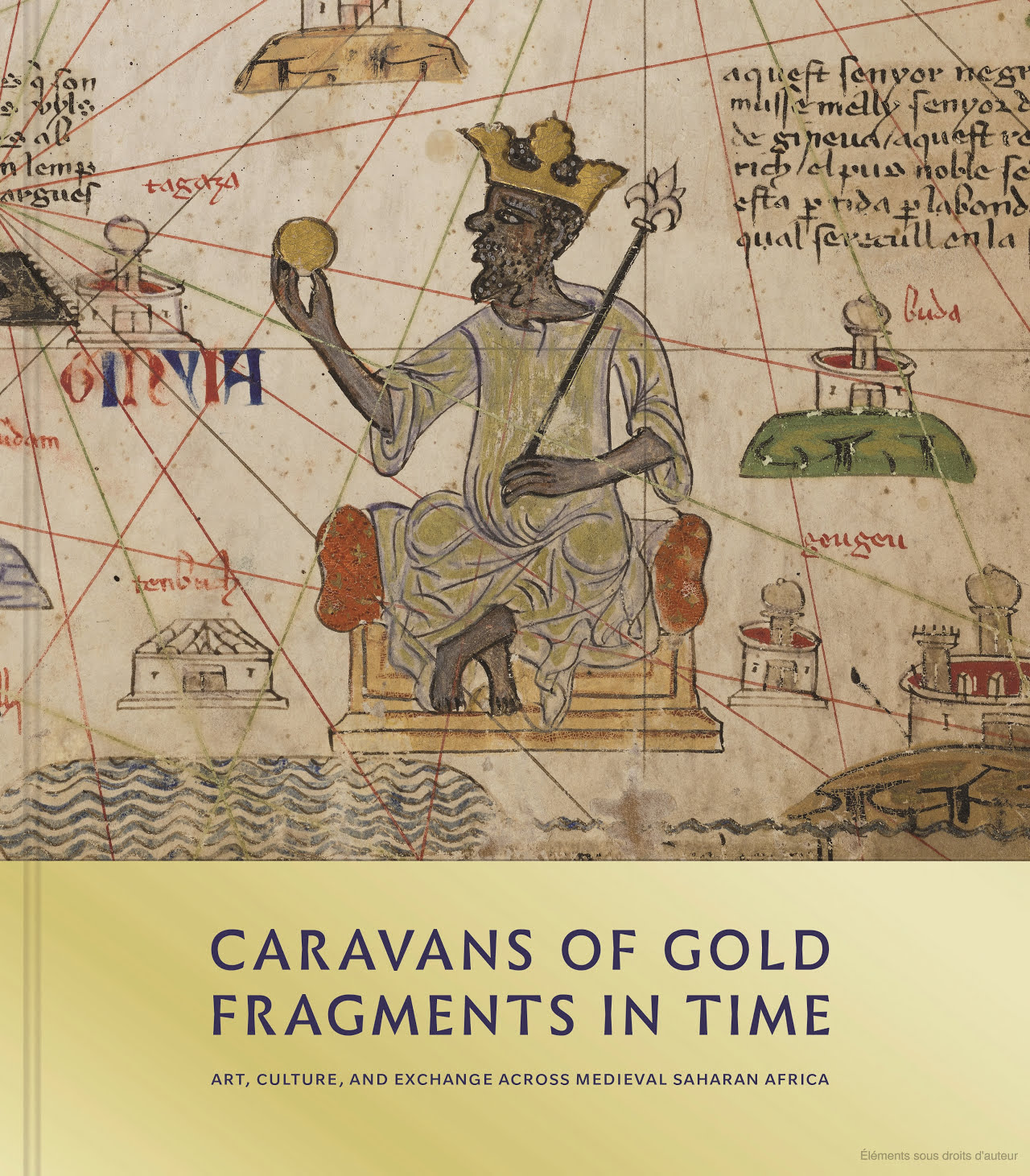
Exhibition schedule : Block Museum of Art, Northwestern University (January 26–July 21, 2019) ; Aga Khan Museum, Toronto (September 21, 2019–February 23, 2020) ; Smithsonian National Museum of African Art, Washington, DC (April 8–November 29, 2020)
"How West African gold and trade across the Sahara were central to the medieval world
The Sahara Desert was a thriving crossroads of exchange for West Africa, North Africa, the Middle East, and Europe in the medieval period. Fueling this exchange was West African gold, prized for its purity and used for minting currencies and adorning luxury objects such as jewelry, textiles, and religious objects. Caravans made the arduous journey by camel southward across the Sahara carrying goods for trade—glass vessels and beads, glazed ceramics, copper, books, and foodstuffs, including salt, which was obtained in the middle of the desert. Northward, the journey brought not only gold but also ivory, animal hides and leatherwork, spices, and captives from West Africa forced into slavery.
Caravans of Gold, Fragments in Time draws on the latest archaeological discoveries and art historical research to construct a compelling look at medieval trans-Saharan exchange and its legacy. Contributors from diverse disciplines present case studies that form a rich portrayal of a distant time. Topics include descriptions of key medieval cities around the Sahara ; networks of exchange that contributed to the circulation of gold, copper, and ivory and their associated art forms ; and medieval glass bead production in West Africa’s forest region. The volume also reflects on Morocco’s Gnawa material culture, associated with descendants of West African slaves, and movements of people across the Sahara today.
Featuring a wealth of color images, this fascinating book demonstrates how the rootedness of place, culture, and tradition is closely tied to the circulation of people, objects, and ideas. These “fragments in time” offer irrefutable evidence of the key role that Africa played in medieval history and promote a new understanding of the past and the present."
Kathleen BickfordBerzock is associate director of curatorial affairs at the Block Museum of Art at Northwestern University. She is the author of For Hearth and Altar : African Ceramics from the Keith Achepohl Collection and the coeditor of Representing Africa in American Art Museums : A Century of Collecting and Display. -
Paru récemment Faith in Empire : Religion, Politics, and Colonial Rule in French Senegal, 1880-1940 d’Elizabeth A.
Foster aux Stanford University PressLe 18 février 2019 à 16h58
Paru récemment Faith in Empire : Religion, Politics, and Colonial Rule in French Senegal, 1880-1940 d’Elizabeth A.
Foster aux Stanford University Press, 2013, 288 p. ISBN : 9780804783804 Prix : 60 $ (existe aussi en version électronique).
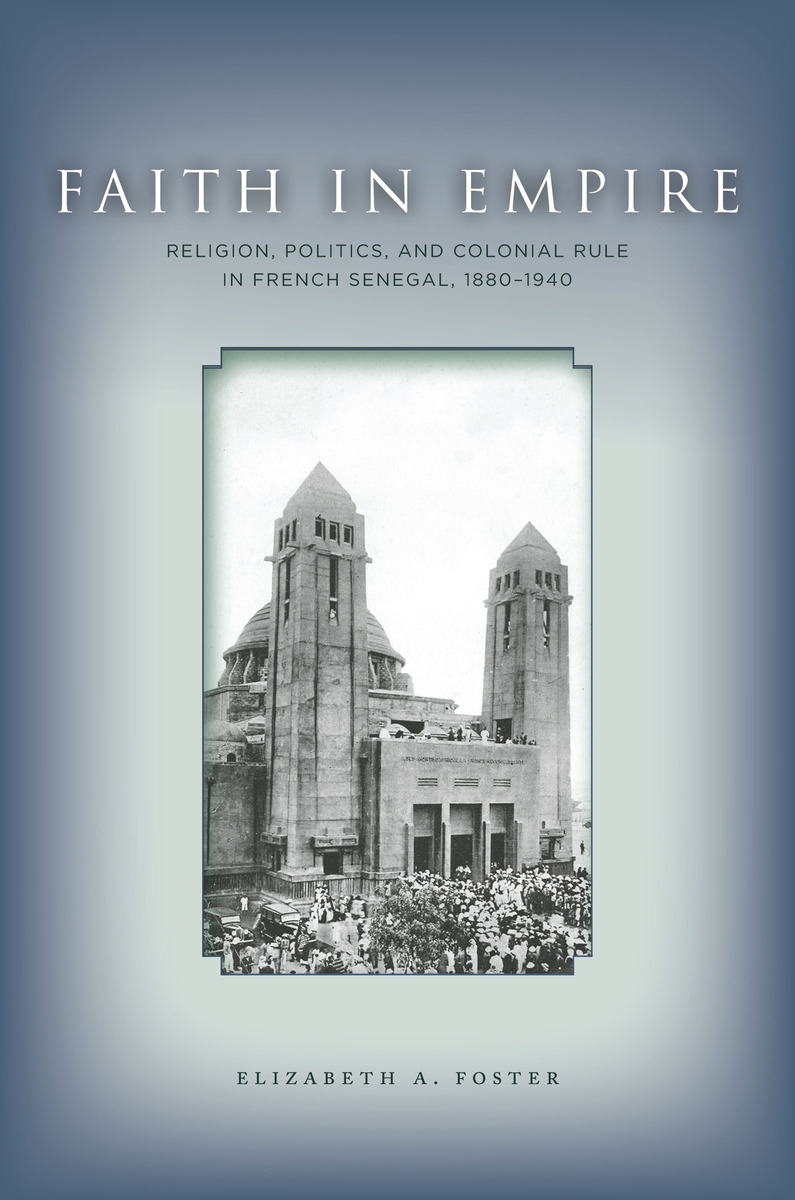
"Faith in Empire is an innovative exploration of French colonial rule in West Africa, conducted through the prism of religion and religious policy. Elizabeth Foster examines the relationships among French Catholic missionaries, colonial administrators, and Muslim, animist, and Christian Africans in colonial Senegal between 1880 and 1940. In doing so she illuminates the nature of the relationship between the French Third Republic and its colonies, reveals competing French visions of how to approach Africans, and demonstrates how disparate groups of French and African actors, many of whom were unconnected with the colonial state, shaped French colonial rule. Among other topics, the book provides historical perspective on current French controversies over the place of Islam in the Fifth Republic by exploring how Third Republic officials wrestled with whether to apply the legal separation of church and state to West African Muslims."
faith-empire-toc.pdf
Elizabeth A.Foster is Assistant Professor of History at Tufts University. -
Vient de paraître African Catholic. Decolonization and the Transformation of the Church d’Elizabeth A.
Foster aux Harvard University PressLe 18 février 2019 à 16h48
Vient de paraître African Catholic. Decolonization and the Transformation of the Church d’Elizabeth A.
Foster aux Harvard University Press, 2019, 384 p. ISBN : 9780674987661 Prix : 40,5 € (existe aussi en version électronique).
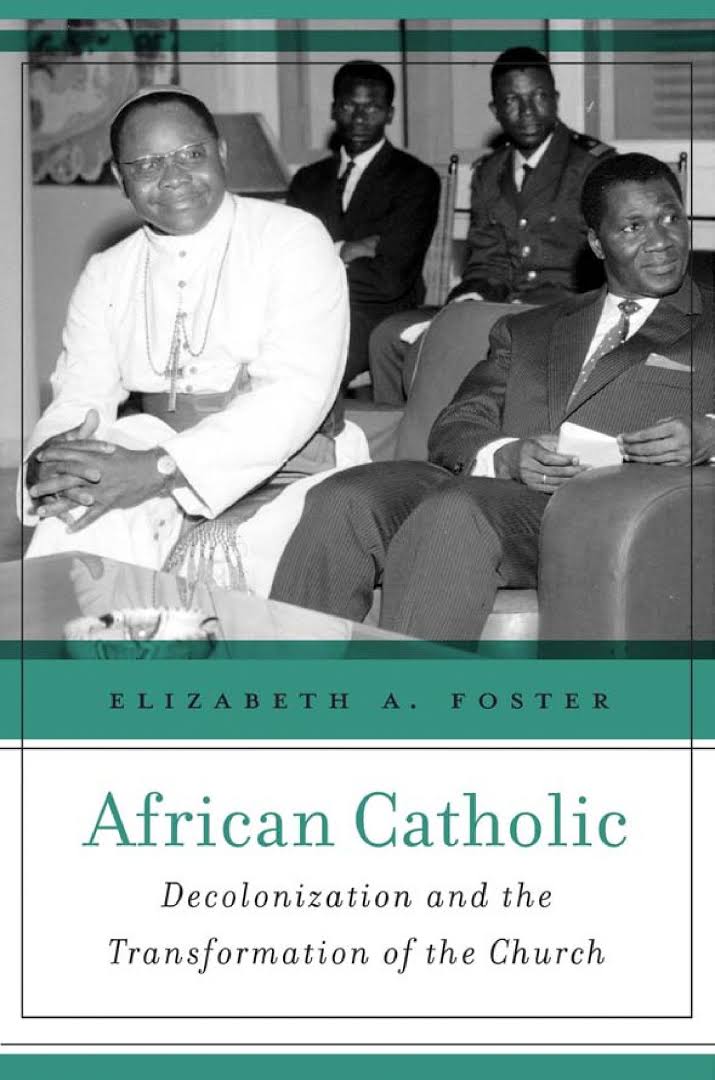
"A groundbreaking history of how Africans in the French Empire embraced both African independence and their Catholic faith during the upheaval of decolonization, leading to a fundamental reorientation of the Catholic Church.
African Catholic examines how French imperialists and the Africans they ruled imagined the religious future of French sub-Saharan Africa in the years just before and after decolonization. The story encompasses the political transition to independence, Catholic contributions to black intellectual currents, and efforts to alter the church hierarchy to create an authentically “African” church.
Elizabeth Foster recreates a Franco-African world forged by conquest, colonization, missions, and conversions—one that still exists today. We meet missionaries in Africa and their superiors in France, African Catholic students abroad destined to become leaders in their home countries, African Catholic intellectuals and young clergymen, along with French and African lay activists. All of these men and women were preoccupied with the future of France’s colonies, the place of Catholicism in a postcolonial Africa, and the struggle over their personal loyalties to the Vatican, France, and the new African states.
Having served as the nuncio to France and the Vatican’s liaison to UNESCO in the 1950s, Pope John XXIII understood as few others did the central questions that arose in the postwar Franco-African Catholic world. Was the church truly universal ? Was Catholicism a conservative pillar of order or a force to liberate subjugated and exploited peoples ? Could the church change with the times ? He was thinking of Africa on the eve of Vatican II, declaring in a radio address shortly before the council opened, “Vis-à-vis the underdeveloped countries, the church presents itself as it is and as it wants to be : the church of all.”"
african-catholic-toc.pdf
Elizabeth A.Foster is the author of Faith in Empire : Religion, Politics, and Colonial Rule in French Senegal, 1880–1940, which won the Alf Andrew Heggoy Book Prize from the French Colonial Historical Society. An Associate Professor of History at Tufts University, she has been a Visiting Scholar at Harvard’s Minda de Gunzburg Center for European Studies and has received Fulbright, ACLS, and NEH Fellowships. -
À (ré)écouter Vincent Hiribarren est l’invité de Jean Lebrun dans La marche de l’histoire sur France Inter sur le thème "Nigéria, l’État du Borno et Boko Haram"
Le 18 février 2019 à 11h47
À (ré)écouter Vincent Hiribarren est l’invité de Jean Lebrun dans La marche de l’histoire sur France Inter sur le thème "Nigéria, l’État du Borno et Boko Haram" lundi 18 février 2019 de 13h30 à 14h.

http://rf.proxycast.org/1538229629691633664/11739-18.02.2019-ITEMA_21985481-0.mp3
"Il y a une décennie, Boko Haram pouvait encore passer pour un groupe rebelle comme tant d’autres. En 2009, il gagne en relief grâce à l’assassinat, très spectaculaire, de son leader par les forces spéciales nigérianes. En 2014, l’enlèvement qu’il organise d’un groupe de lycéennes le fait connaître du monde entier. "
Bibliographie :
Un manguier au Nigéria. Histoires du Borno de Vincent Hiribarren (Plon).
Le phénomène Boko Haram. Au-delà du radicalisme de Zachée Betché (L’Harmattan).
La région du lac Tchad à l’épreuve de Boko Haram, sous la direction de Géraud Magrin, Marc-Antoine Pérouse de Montclos (AFD).
Le blog de Vincent Hiribarren (et de Jean-Pierre Bat) : Libération Africa4 -
Réédition de L’invention du Hottentot. Histoire du regard occidental sur les Khoisan (XVe-XIXe siècle) de François-Xavier
Fauvelle aux Éditions de la SorbonneLe 18 février 2019 à 10h23
Réédition de L’invention du Hottentot. Histoire du regard occidental sur les Khoisan (XVe-XIXe siècle) de François-Xavier
Fauvelle aux Éditions de la Sorbonne, "Libres cours", 2018, 508 p. ISBN : 979-10-351-0091-9 Prix : 18 €.
Ouvrage paru initialement en 2002 et correspondant au texte remanié de la thèse de l’auteur.
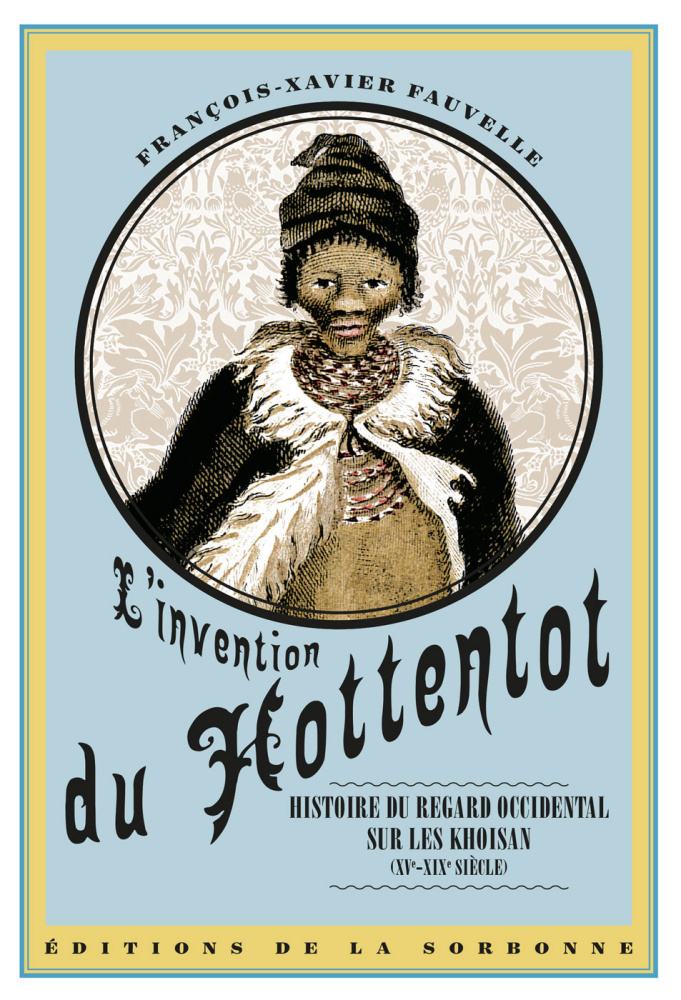
"Dès leur rencontre avec les Européens, les habitants du Cap de Bonne-Espérance, à l’extrémité de l’Afrique, entrent en littérature. Visités par tous les navigateurs en route pour l’Orient, côtoyés par les résidents de la colonie, les Khoisan suscitent un intérêt démultiplié dont on rencontre l’écho dans les récits de voyage, les lettres de la Renaissance portugaise, les débats philosophiques sur l’origine des langues et des peuples, l’anthropologie des Lumières, ou encore la raciologie. Ainsi s’élabore, entre la fin du XVe et la fin du XIXe siècle, la figure du Hottentot. Une figure qui occupe une place centrale sur la scène de l’Ailleurs. Jouant les rôles, souvent paradoxaux, de l’homme premier ou liminal, de l’ignoble et du noble sauvage, le Hottentot a une histoire, qui l’éloigne des réalités africaines. Il devient un être sans chair, un sauvage de papier ô combien utile et manipulable. Du village néerlandais du Cap aux salons parisiens, des ateliers de gravure aux cabinets de dissection, des livres de bord à l’Encyclopédie, cet ouvrage retrace le destin d’un sauvage idéal."
invention-hottentot-tdm.pdf
François-XavierFauvelle est historien de l’Afrique. Il est l’auteur d’une vingtaine d’ouvrages sur l’histoire de l’Afrique, notamment une Histoire de l’Afrique du Sud (Le Seuil, 2006, réédition « Points » 2013), Vols de vaches à Christol Cave (avec J.-L. Le Quellec et Fr. Bon, Publications de la Sorbonne, 2009), Le Rhinocéros d’or. Histoires du Moyen Âge africain (Alma, 2013), À la recherche du sauvage idéal (Le Seuil, 2017). Il a dirigé L’Afrique ancienne. De l’Acacus au Zimbabwe. 20 000 avant notre ère - XVIIe siècle, coll. "Mondes anciens" chez Belin.
Il a été élu Professeur au Collège de France le 25 novembre 2018 à la tête de la première chaire pérenne consacrée à l’Afrique, intitulée : « Histoire et archéologie des mondes africains ».
-
ATECOLE - Atelier du Colonial et des Empires (2018-2019)
Le 18 février 2019 à 09h42
ATECOLE (Séminaire 2018-2019)
ATElier du COLonial et des Empires
Bibliothèque du CRHM-IHMC, entrée rue Saint-Jacques
(galerie Gerson-Galerie Dumas-escalier R)
Université Paris 1 Panthéon-Sorbonne
Le mardi, de 17h à 19h
Séance du Mardi 19 février 2019
Emmanuelle Vagnon (CNRS) et Éric Vallet (Paris 1 Panthéon-Sorbonne)
Autour du livre La fabrique de l’Océan Indien.
Séminaire coordonné par Gregorio Salinero et Bertrand Van Ruymbeke.
Comité d’organisation : Frédéric Régent, Bernard Gainot, Bertrand Haan, Águeda García Garrido, Eric Roulet, Marco Penzi, Radu G. Pāun et Etienne Bourdeu
Séminaire de recherche ouvert à tous.
Séances 2018-2019
I/ 18/9- Éric Roulet (ULCO), Rebelles en diable ! Les gouverneurs des Petites Antilles françaises face aux autorités métropolitaines au XVIIe siècle.
II/ 25/9- Sébastien Malaprade (Labex Tepsis - EHESS-CRH), autour du livre Des châteaux en Espagne. Gouvernement des finances et mobilité sociale au XVIIe siècle, Limoges, Pulim, 2018.
III/ 2/10- Frédéric Régent (Université Paris 1), Les contestations des maîtres et des autorités coloniales par les esclaves et les libres de couleur de 1640 à 1788, dans les Antilles françaises
IV/ 9/10- Clément Thibaud (EHESS), autour du livre Libérer le Nouveau Monde
V/ 16/10- Iris de Rode (Université Paris VIII), présentation du livre La marche sur Yorktown. Le journal de Mathieu Dumas…, éditions J. J. Wuillaume, 2018, et Bertrand Van Ruymbeke, discutant.
VI/ 23/10- Bertrand Van Ruymbeke (Université Paris VIII), Autour du livre Une histoire des États-Unis. De 1492 à nos jours (Tallandier, 2018).
VII/ 30-31/ 10- Villa Finaly (Florence) Journées d’étude « Territorialiser les espaces modernes », co-organisées notamment avec Paris-Sorbonne-Université Centre Roland Mousnier, École doctorale 2 et Labex EHNE ; Université de Caen Normandie ; Università degli studi di Firenze ; Università di Foggia ; Universidad de Extremadura et programme COREDEX ; CAER- Aix-Marseille Université ; Red Columnaria.
VIII/ 6/11- Atelier de recherche de sources et ressources pour l’histoire sur le web, animé par M. Penzi
IX/ 13/11- Éric Roulet (ULCO), Les colons contre l’empire. Les mouvements de contestation des Français et des Anglais dans les Amériques aux XVIIe et XVIIIe siècles (autour du livre, Les rébellions lointaines, PUR, 2019)
X/ 20/11- Simón Gallegos Gabilondo (Université Paris 1 Panthéon-Sorbonne) Autour du livre Les mondes du voyageur : une épistémologie de l’exploration (XVIe - XVIIIe siècle), Paris, Éditions de la Sorbonne, 2018.
XI/ 27/11- Atelier d’écriture de l’histoire, animé par G. Salinero
XII/ 6/12- séance du jeudi, Béatrice Pérez (Paris Sorbonne Université), autour du livre Les marchands de Séville. Une société inquiète, XVe-XVIe, PUPS, Paris, 2016
XIII/ 11/12- J J Ruiz Ibañez (Universidad de Murcia), De l’Hispanophilie.
XIV/ 18/12 Vincent Cousseau (Département d’histoire - FLSH - Université de Limoges) Le massacre des Français d’Haïti en 1804 : de la revendication à l’oubli.
XV/ 22/01/2019- Double séance consacrée au Brésil : Maria Marta Lobo Araújo (Universidade do Minho), Entre Portugal e o Brasil : a caridade dos emigrantes portugueses no Brasil (séculos XVII e XVIII) et Alexandra Esteves (Universidade do Minho), O lazer e as sociabilidades dos "brasileiros" dos dois lados do Atlântico, em oitocentos.
XVI/ 12/02/2019- Raphaël Morera (CNRS-CRH-EHESS), L’eau des mines à Potosi, XVIIe-XVIIIe siècle.
XVII/ 19/2/2019- Emmanuelle Vagnon (CNRS) et Éric Vallet (Paris 1 Panthéon-Sorbonne), autour du livre La fabrique de l’Océan Indien.
XVIII/ 12/3/2019- Pablo Vázquez Gestal (Paris Sorbonne Université), autour du livre Verso la riforma della Spagna.
XIX/ 19/3/2019- Jack Rakove (Stanford University), Sur le Révolution américaine.
Source de l’information :
http://ihmc.ens.fr/Atelier-du-Colonial-et-des-Empires-3082.html
-
Vient de paraître Fruits of Perseverance. The French Presence in the Detroit River Region, 1701-1815 de Guillaume
Teasdale aux McGill-Queen’s University PressLe 15 février 2019 à 21h09
Vient de paraître Fruits of Perseverance. The French Presence in the Detroit River Region, 1701-1815 de Guillaume
Teasdale aux McGill-Queen’s University Press, coll. "McGill-Queen’s French Atlantic Worlds Series" (vol. 4), 2019, 240 p. ISBN : 9780773555013 Prix : 27,87 € (existe aussi en version électronique).
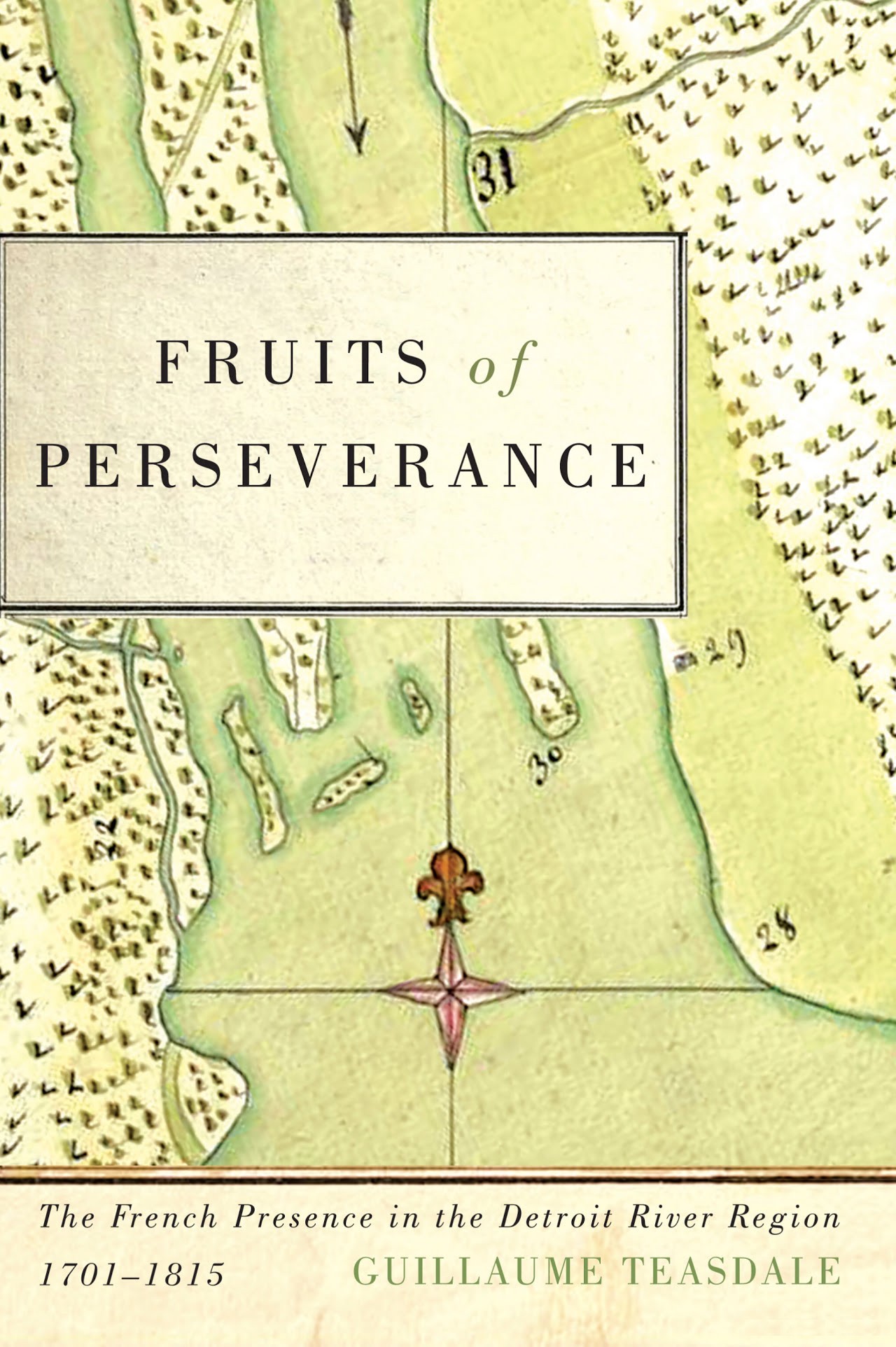
"Founded by French military entrepreneur Antoine Laumet de Lamothe Cadillac in 1701, colonial Detroit was occupied by thousands of French settlers who established deep roots on both sides of the river. The city’s unmistakable French past, however, has been long neglected in the historiography of New France and French North America.
Exploring the French colonial presence in Detroit, from its establishment to its dissolution in the early nineteenth century, Fruits of Perseverance explains how a society similar to the rural settlements of the Saint Lawrence valley developed in an isolated place and how it survived well beyond the fall of New France. As Guillaume Teasdale describes, between the 1730s and 1750s, French authorities played a significant role in promoting land occupation along the Detroit River by encouraging settlers to plant orchards and build farms and windmills. After New France’s defeat in 1763, these settlers found themselves living under the British flag in an Aboriginal world shortly before the newly independent United States began its expansion west.
Fruits of Perseverance offers a window into the development of a French community in the borderlands of New France, whose heritage is still celebrated today by tens of thousands of residents of southwest Ontario and southeast Michigan."
fruitsofpereverance-toc.pdf
GuillaumeTeasdale is assistant professor of history and director of the Detroit River Border Region Digital History Project at the University of Windsor.