Le site web de la Société française d’histoire des outre-mers (S
Articles les plus récents
-
Hors-Série Concours de la S
fhom - Capes et Agrégation d’histoire, 2022-2025Commander (10 €) le hors-série Histoire coloniale et impériale de l’Afrique :
https://www.payasso.fr/librairie-sfhom/commandes
-
Vient de paraître Decolonising Europe ? Popular Responses to the End of Empire sous la direction de Berny
Sèbe et Matthew G.Stanard chez RoutledgeLe 23 juin 2020 à 13h44
Vient de paraître Decolonising Europe ? Popular Responses to the End of Empire sous la direction de Berny
Sèbe et Matthew G.Stanard chez Routledge, coll. "Empire and the Making of the Modern World, 1650-2000", 2020, 280 p. ISBN : 9780367139605 Prix : 120 £ (existe également en version numérique).

"Decolonising Europe ? Popular Responses to the End of Empire offers a new paradigm to understand decolonisation in Europe by showing how it was fundamentally a fluid process of fluxes and refluxes involving not only transfers of populations, ideas, and sociocultural practices across continents but also complex intra-European dynamics at a time of political convergence following the Treaty of Rome. Decolonisation was neither a process of sudden, rapid changes to European cultures nor one of cultural inertia, but a development marked by fluidity, movement, and dynamism. Rather than being a static process where Europe’s (former) metropoles and their peoples ‘at home’ reacted to the end of empire ‘out there’, decolonisation translated into new realities for Europe’s cultures, societies, and politics as flows, ebbs, fluxes, and cultural refluxes reshaped both former colonies and former metropoles.
The volume’s contributors set out a carefully crafted panorama of decolonisation’s sequels in European popular culture by means of in-depth studies of specific cases and media, analysing the interwoven meaning, momentum, memory, material culture, and migration patterns of the end of empire across eight major European countries.
The revised meaning of ‘decolonisation’ that emerges will challenge scholars in several fields, and the panorama of new research in the book charts paths for new investigations. The question mark in the title asks not only how European cultures experienced the ‘end of empire’ but also the extent to which this is still a work in progress."
decolonising-toc.pdf
BernySèbe is Senior Lecturer in Colonial and Post-Colonial Studies at the University of Birmingham, UK.
Matthew G.Stanard is Professor of History at Berry College, USA -
Vient de paraître Slavery in the Global Diaspora of Africa de Paul E.
Lovejoy chez RoutledgeLe 23 juin 2020 à 13h24
Vient de paraître Slavery in the Global Diaspora of Africa de Paul E.
Lovejoy chez Routledge, coll. "Global Africa", 2019, 298 p. ISBN : 9781138059542 Prix : 120 £ (existe aussi en version électronique).

"The collective significance of the themes that are explored in Slavery in the Global Diaspora of Africa bridge the Atlantic and thereby provide insights into historical debates that address the ways in which parts of Africa fitted into the modern world that emerged in the Atlantic basin.
The study explores the conceptual problems of studying slavery in Africa and the broader Atlantic world from a perspective that focuses on Africa and the historical context that accounts for this influence. Paul Lovejoy focuses on the parameters of the enforced migration of enslaved Africans, including the impact on civilian populations in Africa, constraints on migration, and the importance of women and children in the movement of people who were enslaved. The prevalence of slavery in Africa and the transformations of social and political formations of societies and political structures during the era of trans-Atlantic migration inform the book’s research. The analysis places Africa, specifically western Africa, at the center of historical change, not on the frontier or periphery of western Europe or the Americas, and provides a global perspective that reconsiders historical reconstruction of the Atlantic world that challenges the distortions of Eurocentrism and national histories.
Slavery in the Global Diaspora of Africa will be of interest to scholars and students of colonial history, African history, Diaspora Studies, the Black Atlantic and the history of slavery. "
p.lovejoy-slavery-global-diaspora-africa-toc.pdf
Paul E.Lovejoy is Distinguished Research Professor, Department of History, York University, and holds the Canada Research Chair in African Diaspora History. -
Vient de paraître The Routledge Companion to Marine and Maritime Worlds 1400-1800 sous la direction de Claire
Jowitt , CraigLambert et SteveMentz chez RoutledgeLe 22 juin 2020 à 15h57
Vient de paraître The Routledge Companion to Marine and Maritime Worlds 1400-1800 sous la direction de Claire
Jowitt , CraigLambert et SteveMentz chez Routledge, coll. "Routledge Companion", 2020, 610 p. ISBN : 9780367471842 Prix : 190 £ (existe également en version électronique).
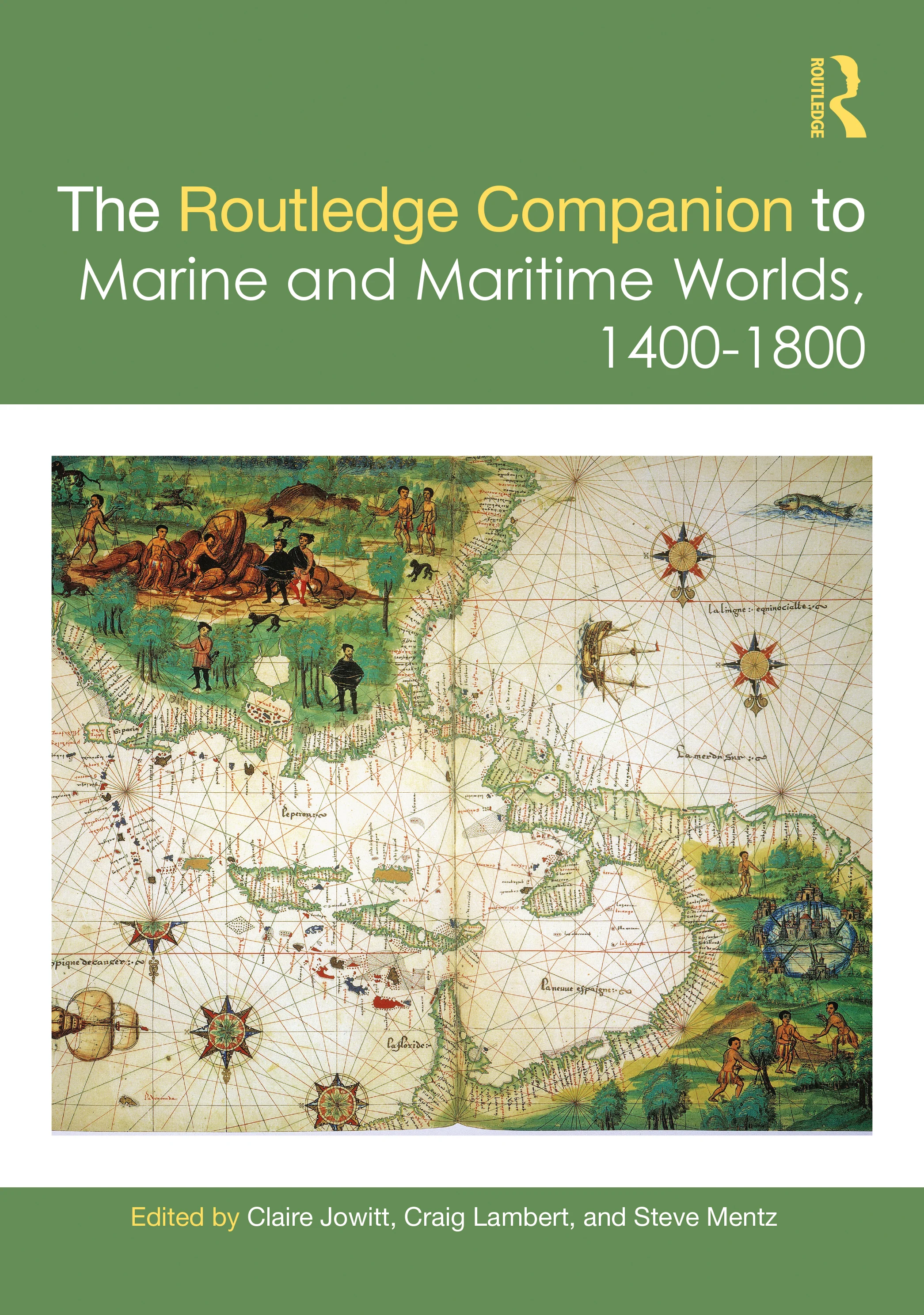
"The Routledge Companion to Marine and Maritime Worlds, 1400‒1800 explores early modern maritime history, culture, and the current state of the research and approaches taken by experts in the field.
Ranging from cartography to poetry and decorative design to naval warfare, the book shows how once-traditional and often Euro-chauvinistic depictions of oceanic ‘mastery’ during the early modern period have been replaced by newer global ideas. This comprehensive volume challenges underlying assumptions by balancing its assessment of the consequences and accomplishments of European navigators in the era of Columbus, da Gama, and Magellan, with an awareness of the sophistication and maritime expertise in Asia, the Arab world, and the Americas. By imparting riveting new stories and global perceptions of maritime history and culture, the contributors provide readers with fresh insights concerning early modern entanglements between humans and the vast, unpredictable ocean.
With maritime studies growing and the ocean’s health in decline, this volume is essential reading for academics and students interested in the historicization of the ocean and the ways early modern cultures both conceptualized and utilized seas."
marine-maritime-worlds-toc.pdf
ClaireJowitt is Professor of Renaissance Studies at the University of East Anglia. Author of Voyage Drama and Gender Politics, 1589‒1642 and The Culture of Piracy : English Literature and Seaborne Crime 1580‒1630, she is currently preparing, as General Editor, an edition of Richard Hakluyt’s The Principal Navigations (1598‒1600).
CraigLambert is Associate Professor in Maritime History at the University of Southampton. Author of Shipping the Medieval Military and numerous articles/book chapters on naval operations and maritime communities (c.1300‒c.1600), he has recently launched a free to access searchable database of over 50,000 ship-voyages (c.1400‒c.1577) : www.medievalandtudorships.org
SteveMentz is Professor of English at St. John’s University in New York City. A scholar of early modern literature and the environmental humanities, he is author of Shipwreck Modernity : Ecologies of Globalization 1550‒1719 (2015), Break Up the Anthropocene (2019), and Ocean (2020). -
Vient de paraître The Private Side of the Canton Trade, 1700–1840. Beyond the Companies sous la direction de Paul A.
Van Dyke and Susan E.Schopp aux Hong Kong University PressLe 3 juin 2020 à 15h57
Vient de paraître The Private Side of the Canton Trade, 1700–1840. Beyond the Companies sous la direction de Paul A.
Van Dyke and Susan E.Schopp aux Hong Kong University Press, 2018, 208 p. ISBN : 978-988-8390-93-9 Prix : 60 $ (existe aussi en version électronique sur Project Muse).
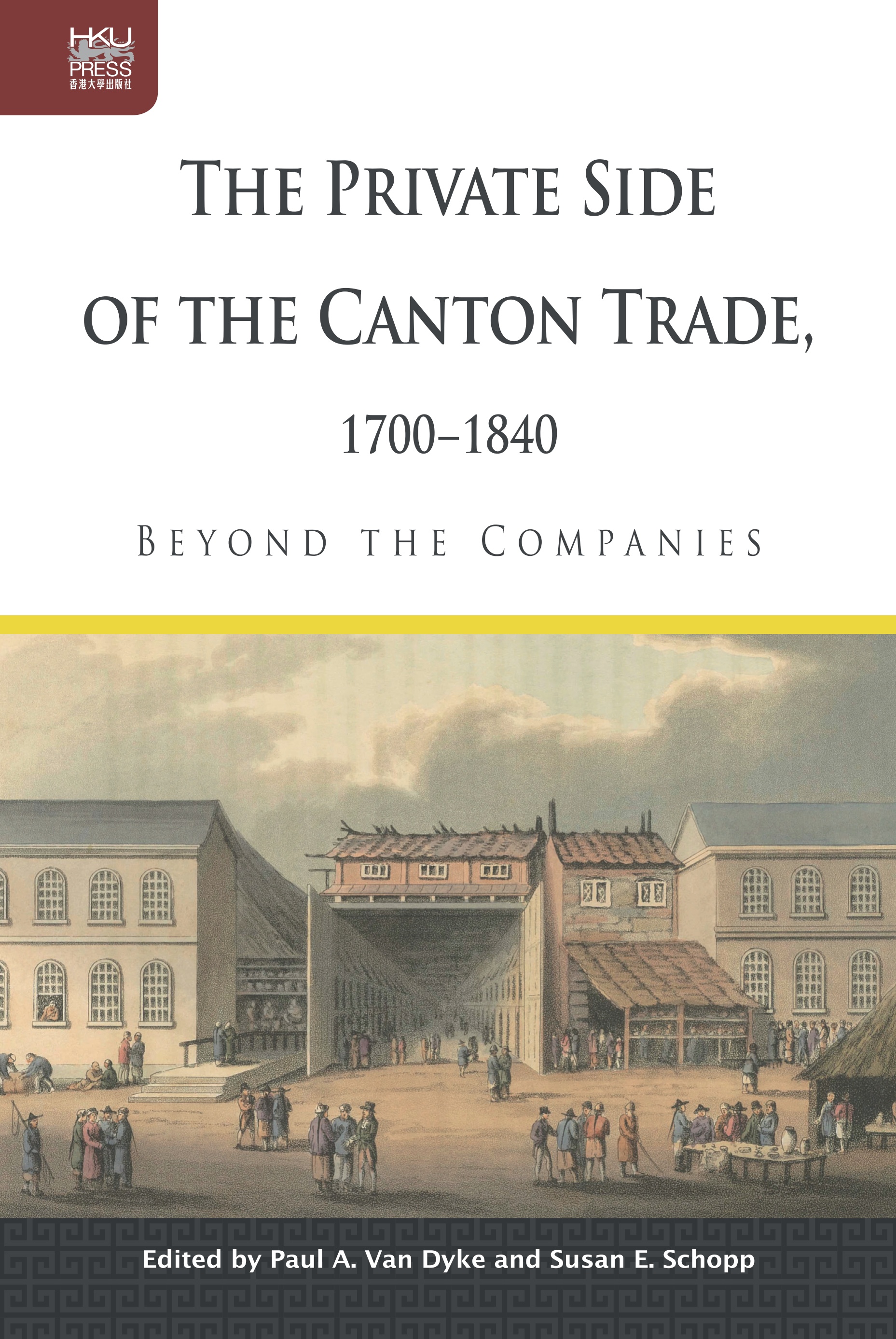
"It is not often recognized that China was one of the few places in the early modern world where all merchants had equal access to the market. This study shows that private traders, regardless of the volume of their trade, were granted the same privileges in Canton as the large East India companies. All of these companies relied, to some extent, on private capital to finance their operations. Without the investments from individuals, the trade with China would have been greatly hindered. Competitors, large and small, traded alongside each other while enemies traded alongside enemies. Buddhists, Muslims, Catholics, Protestants, Parsees, Armenians, Hindus, and others lived and worked within the small area in the western suburbs of Canton designated for foreigners. Cantonese shopkeepers were not allowed to discriminate against any foreign traders. In fact, the shopkeepers were generally working in a competitive environment, providing customer-oriented service that generated goodwill, friendship, and trust. These contributed to the growth of the trade as a whole. While many private traders were involved in smuggling opium, others, such as Nathan Dunn, were much opposed to it. The case studies in this volume demonstrate that fortunes could be made in China by trading in legitimate items just as successfully as in illegitimate ones, which tellingly suggests that the rapid spread of opium smuggling in China could be a result of inadequate, rather than excessive, regulation by the Qing government."
private-side-canton-toc.pdf
Paul A.Van Dyke is professor of history at Sun Yat-sen University in Guangzhou and author of Merchants of Canton and Macao : Success and Failure in Eighteenth-Century Chinese Trade (Hong Kong University Press, 2015). Susan E.Schopp is a historian whose research focuses on the French Canton trade and on East India ships. In 1997 she identified the wreck of the English East India Company vessel Earl Temple. She is also a crew member of Friendship of Salem, a reconstruction of an American East Indiaman. -
Vient de paraître Where Caciques and Mapmakers Met. Border Making in Eighteenth-Century South America de Jeffrey Alan
Erbig Jr. aux University of North Carolina PressLe 30 mai 2020 à 21h13
Vient de paraître Where Caciques and Mapmakers Met. Border Making in Eighteenth-Century South America de Jeffrey Alan
Erbig Jr. aux University of North Carolina Press, coll. "David J. Weber Series in the New Borderlands History", 2020, 280 p. ISBN : 978-1-4696-5504-8 Prix : 24,95 $ (existe aussi en version électronique).
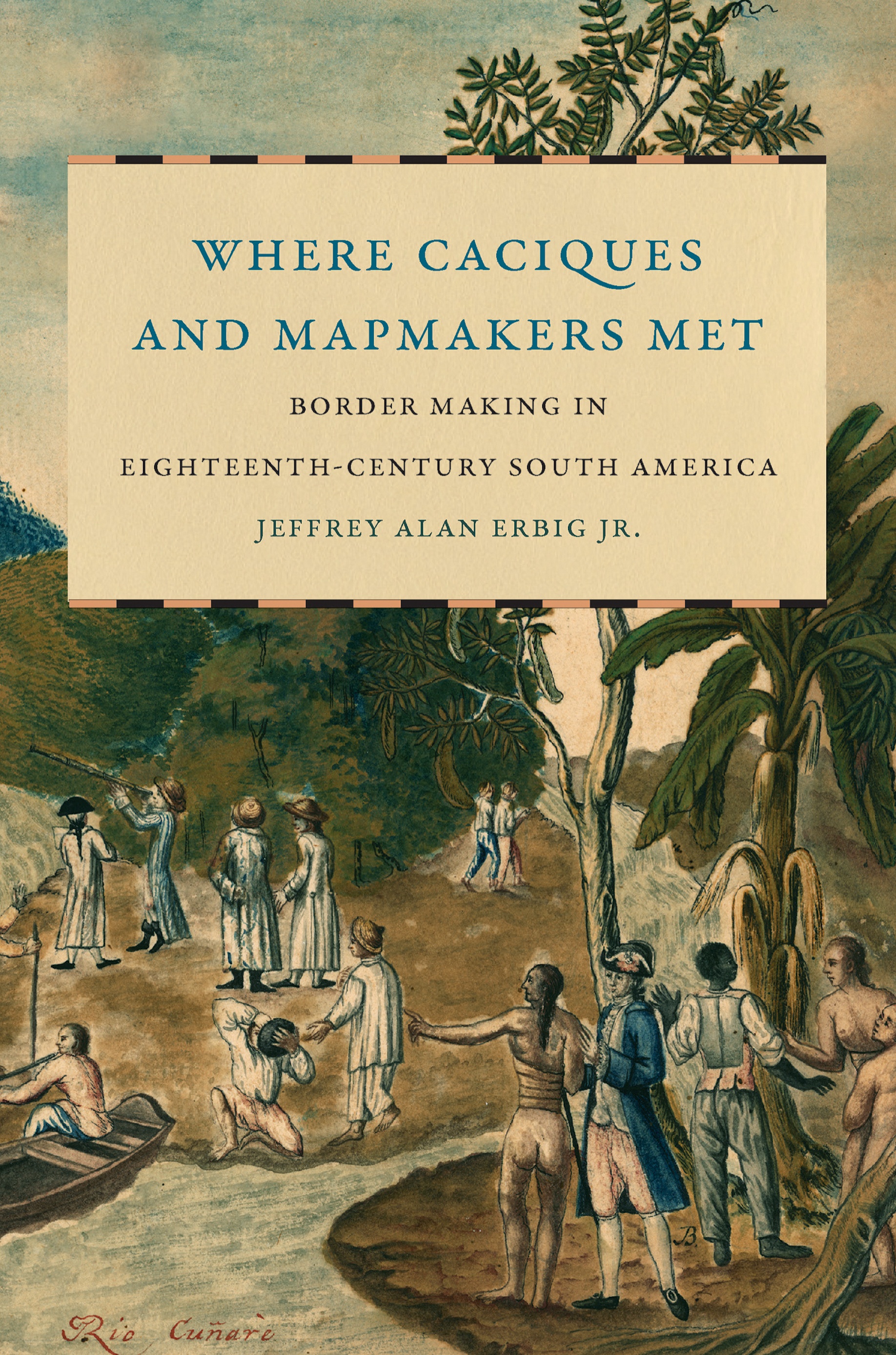
"During the late eighteenth century, Portugal and Spain sent joint mapping expeditions to draw a nearly 10,000-mile border between Brazil and Spanish South America. These boundary commissions were the largest ever sent to the Americas and coincided with broader imperial reforms enacted throughout the hemisphere. Where Caciques and Mapmakers Met considers what these efforts meant to Indigenous peoples whose lands the border crossed. Moving beyond common frameworks that assess mapped borders strictly via colonial law or Native sovereignty, it examines the interplay between imperial and Indigenous spatial imaginaries. What results is an intricate spatial history of border making in southeastern South America (present-day Argentina, Brazil, and Uruguay) with global implications.
Drawing upon manuscripts from over two dozen archives in seven countries, Jeffrey Erbig traces on-the-ground interactions between Ibero-American colonists, Jesuit and Guaraní mission-dwellers, and autonomous Indigenous peoples as they responded to ever-changing notions of territorial possession. It reveals that Native agents shaped when and where the border was drawn, and fused it to their own territorial claims. While mapmakers’ assertions of Indigenous disappearance or subjugation shaped historiographical imaginations thereafter, Erbig reveals that the formation of a border was contingent upon Native engagement and authority."
where-caciques-toc.pdf
Jeffrey AlanErbig Jr. (https://twitter.com/jaerbig) is assistant professor of Latin American and Latino studies at the University of California, Santa Cruz. -
Vient de paraître The Gulf of Mexico. A Maritime History de John S.
Sledge aux University of South Carolina PressLe 30 mai 2020 à 21h03
Vient de paraître The Gulf of Mexico. A Maritime History de John S.
Sledge aux University of South Carolina Press, coll. "Southern History", 2019, 280 p. ISBN : 978-1-64336-014-0 Prix : 29 $ (existe aussi en version électronique).
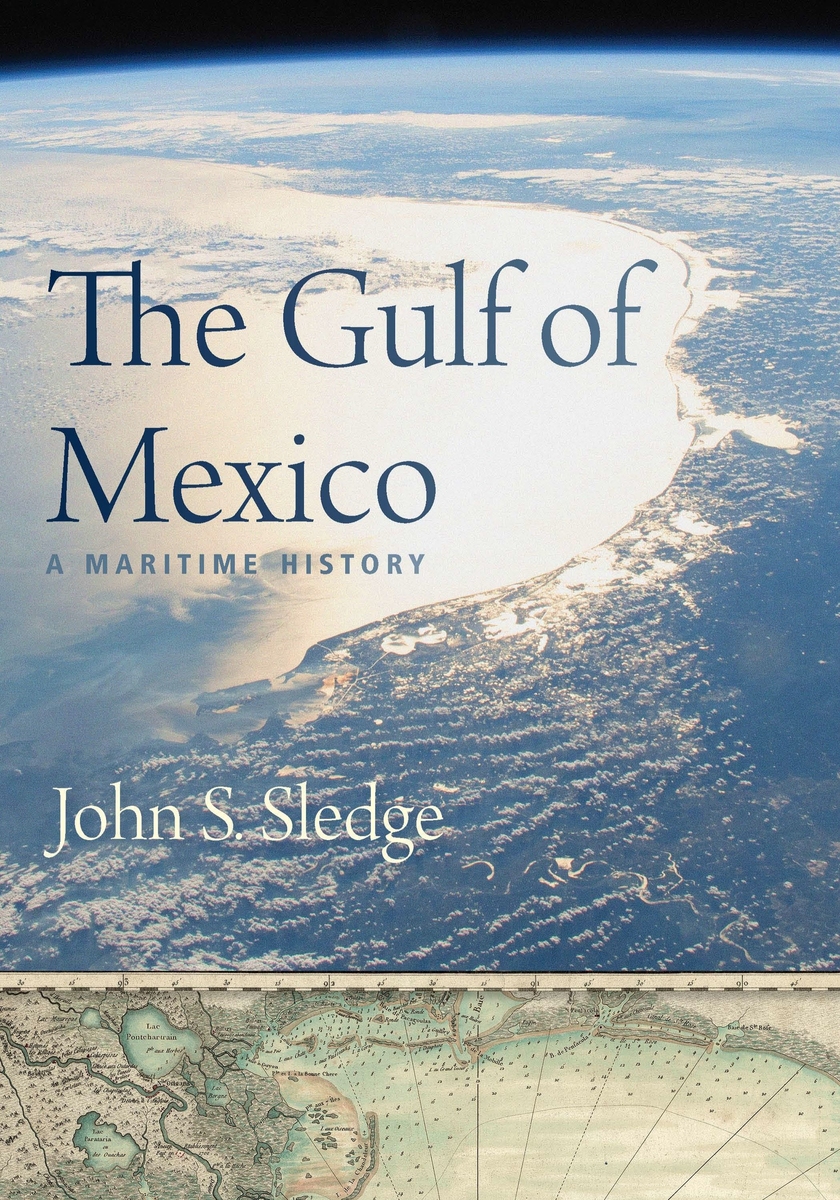
"The Gulf of Mexico presents a compelling, salt-streaked narrative of the earth’s tenth largest body of water. In this beautifully written and illustrated volume, John S. Sledge explores the people, ships, and cities that have made the Gulf’s human history and culture so rich. Many famous figures who sailed the Gulf’s viridian waters are highlighted, including Ponce de León, Robert Cavelier de La Salle, Francis Drake, Elizabeth Agassiz, Ernest Hemingway, and Charles Dwight Sigsbee at the helm of the doomed Maine. Sledge also introduces a fascinating array of people connected to maritime life in the Gulf, among them Maya priests, French pirates, African American stevedores, and Greek sponge divers.
Gulf events of global historical importance are detailed, such as the only defeat of armed and armored steamships by wooden sailing vessels, the first accurate deep-sea survey and bathymetric map of any ocean basin, the development of shipping containers by a former truck driver frustrated with antiquated loading practices, and the worst environmental disaster in American annals.
Occasionally shifting focus ashore, Sledge explains how people representing a gumbo of ethnicities built some of the world’s most exotic cities—Havana, way station for conquistadores and treasure-filled galleons ; New Orleans, the Big Easy, famous for its beautiful French Quarter, Mardi Gras, and relaxed morals ; and oft-besieged Veracruz, Mexico’s oldest city, founded in 1519 by Hernán Cortés. Throughout history the residents of these cities and their neighbors along the littoral have struggled with challenges both natural and human-induced—devastating hurricanes, frightening epidemics, catastrophic oil spills, and conflicts ranging from dockside brawls to pirate raids, foreign invasion, civil war, and revolution. In the modern era the Gulf has become critical to energy production, fisheries, tourism, and international trade, even as it is threatened by pollution and climate change. The Gulf of Mexico : A Maritime History is a work of verve and sweep that illuminates both the risks of life on the water and the riches that come from its bounty."
gulf-mexico-toc.pdf
John S.Sledge is senior architectural historian for the Mobile Historic Development Commission and a member of the National Book Critics Circle. He holds a bachelor’s degree in history and Spanish from Auburn University and a master’s in historic preservation from Middle Tennessee State University. Sledge is the author of six previous books, including Southern Bound : A Gulf Coast Journalist on Books, Writers, and Literary Pilgrimages of the Heart ; The Mobile River ; and These Rugged Days : Alabama in the Civil War. -
Vient de paraître Slave No More. Self-Liberation before Abolitionism in the Americas d’Aline
Helg aux University of North Carolina PressLe 30 mai 2020 à 20h43
Vient de paraître Slave No More. Self-Liberation before Abolitionism in the Americas d’Aline
Helg aux University of North Carolina Press, 2019, 368 p. ISBN : 978-1-4696-4963-4 Prix : 29,95 $ (existe aussi en version électronique).
Traduit du français par LaraVergnaud . Publié initialement à La Découverte sous le titre : Plus jamais esclaves ! De l’insoumission à la révolte, le grand récit d’une émancipation (1492-1838) (2016)
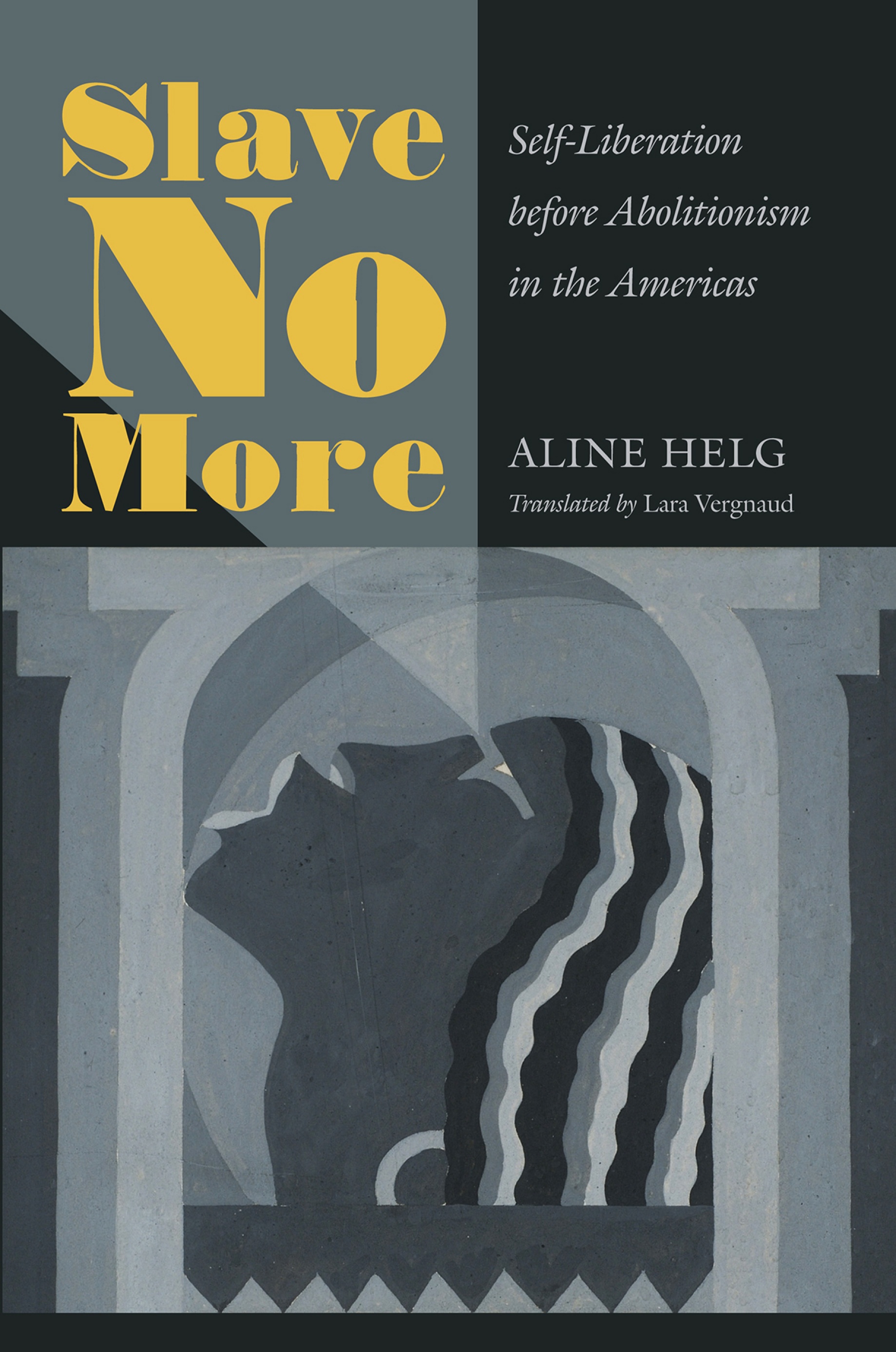
"Commanding a vast historiography of slavery and emancipation, Aline Helg reveals as never before how significant numbers of enslaved Africans across the entire Western Hemisphere managed to free themselves hundreds of years before the formation of white-run abolitionist movements. Her sweeping view of resistance and struggle covers more than three centuries, from early colonization to the American and Haitian revolutions, Spanish American independence, and abolition in the British Caribbean. Helg not only underscores the agency of those who managed to become “free people of color” before abolitionism took hold but also assesses in detail the specific strategies they created and utilized.
While recognizing the powerful forces supporting slavery, Helg articulates four primary liberation strategies : flight and marronage ; manumission by legal document ; military service, for men, in exchange for promised emancipation ; and revolt—along with a willingness to exploit any weakness in the domination system. Helg looks at such actions at both individual and community levels and in the context of national and international political movements. Bringing together the broad currents of liberal abolitionism with an original analysis of forms of manumission and marronage, Slave No More deepens our understanding of how enslaved men, women, and even children contributed to the slow demise of slavery."
slave-no-more-toc.pdf
AlineHelg is professor of history at the University of Geneva and author of Our Rightful Share and Liberty and Equality in Caribbean Colombia, 1770—1835.
LaraVergnaud is a French-English translator based in Washington, D.C. -
Vient de paraître Gum Arabic. The Golden Tears of the Acacia Tree de Dorrit
van Dalen aux Leiden University PressLe 29 mai 2020 à 07h52
Vient de paraître Gum Arabic. The Golden Tears of the Acacia Tree de Dorrit
van Dalen aux Leiden University Press, 2019, 204 p. ISBN : 9789087283360 Prix : 24,50 € (existe aussi en version électronique).

"Gum Arabic has been seen as a symbol of the “noble Orient” and later as a symbol of trouble. It is the hardened sap of varieties of acacia trees which grow exclusively in the Sahel, an area stretching across the African continent just south of the Sahara. From the time of the Crusades, when Europeans purchased it in Arab countries, it has played an ever-growing role in the global economy. It is now a common ingredient in foods, sodas, and cosmetics.
Combining cultural history with travel writing, Dorrit van Dalen follows the fascinating history and shifting meanings assigned to gum Arabic from Shakespeare to Bin Laden and from the Industrial Revolution to a veteran of a recent coup d’état in Chad. She shows that both African and Western civilisations would not be the same without these tears of the acacia."
gum-arabic-toc.pdf
Dorritvan Dalen has worked in West Africa in international cooperation and as a journalist. She is now affiliated with Leiden University. -
Vient de paraître The Global Spanish Empire. Five Hundred Years of Place Making and Pluralism sous la direction de Christine
Beaule et John G.Douglass aux University of Arizona PressLe 29 mai 2020 à 07h20
Vient de paraître The Global Spanish Empire. Five Hundred Years of Place Making and Pluralism sous la direction de Christine
Beaule et John G.Douglass aux University of Arizona Press, coll. "Amerind Studies in Anthropology", 2020, 344 p. ISBN : 9780816540846 Prix : 65 $ (existe aussi en version électronique).

"The Spanish Empire was a complex web of places and peoples. Through an expansive range of essays that look at Africa, the Americas, Asia, the Caribbean, and the Pacific, this volume brings a broad range of regions into conversation. The contributors focus on nuanced, comparative exploration of the processes and practices of creating, maintaining, and transforming cultural place making within pluralistic Spanish colonial communities.
The Global Spanish Empire argues that patterned variability is necessary in reconstructing Indigenous cultural persistence in colonial settings. The volume’s eleven case studies include regions often neglected in the archaeology of Spanish colonialism. The time span under investigation is extensive as well, transcending the entirety of the Spanish Empire, from early impacts in West Africa to Texas during the 1800s. The contributors examine the making of a social place within a social or physical landscape. They discuss the appearance of hybrid material culture, the incorporation of foreign goods into local material traditions, the continuation of local traditions, and archaeological evidence of opportunistic social climbing. In some cases, these changes in material culture are ways to maintain aspects of traditional culture rather than signifiers of new cultural practices.
The Global Spanish Empire tackles broad questions about Indigenous cultural persistence, pluralism, and place making using a global comparative perspective grounded in the shared experience of Spanish colonialism."
global-spanish-toc.pdf
Christine D.Beaule , associate professor of languages and literatures of Europe and the Americas and director of the General Education Office, University of Hawai’i at Mānoa. Her work focuses on Spanish colonial-ism in both the Philippines and the central highland Andes.
John G.Douglass , vice president of research and standards at Statistical Research, Inc., and adjunct professor in the School of Anthropology at the University of Arizona. His research has focused on indigenous-colonialinteraction, religious performance, household archaeology, and commu-nity creation in the American Southwest, California, and Mesoamerica.
Contributeurs de l’ouvrage : Stephen Acabado - Grace Barretto-Tesoro - James M. Bayman - Christopher R. DeCorse - Boyd M. Dixon - William R. Fowler - Martin Gibbs - Corinne L. Hofman - Hannah G. Hoover - Stacie M. King - Kevin Lane - Laura Matthew - Sandra Montón-Subías - Natalia Moragas Segura - Michelle M. Pigott - Christopher B. Rodning - David Roe - Roberto Valcárcel Rojas - Steve A. Tomka - Jorge Ulloa Hung - Juliet Wiersema -
Vient de paraître Jamaica Ladies. Female Slaveholders and the Creation of Britain’s Atlantic Empire de Christine
Walker aux University of North Carolina Press & OIEAHLe 28 mai 2020 à 13h12
Vient de paraître Jamaica Ladies. Female Slaveholders and the Creation of Britain’s Atlantic Empire de Christine
Walker aux University of North Carolina Press, coll. "The Omohundro Institute of Early American History and Culture and the University of North Carolina Press Series", 2020, 336 p. ISBN : 978-1-4696-5879-7 Prix : 22,95 $ (existe en version électronique).
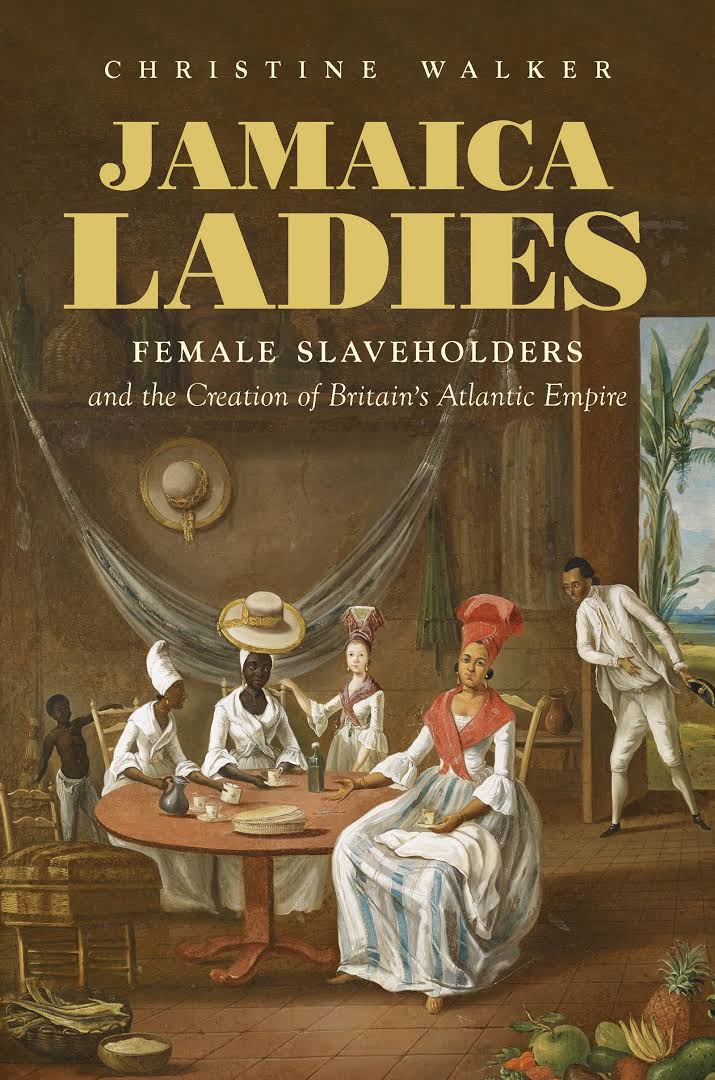
"Jamaica Ladies is the first systematic study of the free and freed women of European, Euro-African, and African descent who perpetuated chattel slavery and reaped its profits in the British Empire. Their actions helped transform Jamaica into the wealthiest slaveholding colony in the Anglo-Atlantic world. Starting in the 1670s, a surprisingly large and diverse group of women helped secure English control of Jamaica and, crucially, aided its developing and expanding slave labor regime by acquiring enslaved men, women, and children to protect their own tenuous claims to status and independence.
Female colonists employed slaveholding as a means of advancing themselves socially and financially on the island. By owning others, they wielded forms of legal, social, economic, and cultural authority not available to them in Britain. In addition, slaveholding allowed free women of African descent, who were not far removed from slavery themselves, to cultivate, perform, and cement their free status. Alongside their male counterparts, women bought, sold, stole, and punished the people they claimed as property and vociferously defended their rights to do so. As slavery’s beneficiaries, these women worked to stabilize and propel this brutal labor regime from its inception."
jamaica-ladies-toc.pdf
ChristineWalker (https://twitter.com/dr_cmwalker) is assistant professor of history at Yale-NUS College in Singapore.